
A water bill that climbs with no change in how people live in the building is a puzzle worth solving quickly. Water that leaks into the ground or runs through a worn toilet flapper does no visible damage, so the bill is often the first and only warning. The good news is that the meter itself can tell you most of what you need to know, and the test takes about ten minutes.
In East Orange the question is often bigger than one household. The city's draft housing plan counts about 69 percent of homes as renter occupied, and 38.1 percent of units sit in buildings of 20 or more. In many of those buildings one meter serves several apartments, so a single running toilet can raise a bill that every tenant and the owner care about.
We find where the water is going and tell you what it will take to stop it. Call (973) 488-5410 to talk through what you are seeing, or read the steps below and run the test yourself first. We will also say plainly when the cause is a billing question for the Water Commission and not a plumbing problem.
Run The Ten Minute No-Use Test
This is the single most useful check, and it needs no tools. Turn off every faucet and appliance, stop the dishwasher and washing machine, switch off any ice maker supply and irrigation timer, and ask everyone in the building not to flush. In a multifamily building, this means coordinating with neighbors, so pick a quiet hour and post a note.
Find the meter and read the register, which looks like an odometer with a row of digits. Write the number down with the time. Wait ten minutes without using any water, then read it again. If the number changed, water is moving somewhere it should not be.
If the reading is the same, wait a few hours or overnight and check again. Slow leaks can move too little water to show in ten minutes. A toilet that refills only now and then is the classic example, and it can pass a short test and still waste a lot over a month.
Using The Leak Indicator Dial
Most residential meters have a small dial, triangle or star on the face that turns with very low flow. It is the fastest way to see a leak because it reacts to a trickle the digits will not show for minutes. With everything off, watch it for a minute or two.
A dial that spins steadily means continuous flow, which usually points to a pipe leak or a stuck valve. A dial that ticks forward in short bursts every few minutes often points to a toilet refilling on its own. If your meter has no obvious indicator, the digit comparison from the test above still works, so do not worry about the style of the meter.
Check The Toilets With Dye
Toilets cause more hidden water loss than any other fixture in a typical building. The flapper at the bottom of the tank wears, warps or gets stuck on a chain, and water slips into the bowl without any sound. Many people never hear it.
Add a few drops of dye or a dark tea bag to each tank, then wait about fifteen minutes without flushing. Color showing up in the bowl means the flapper or fill valve is leaking. This is a small repair covered on our toilet repair page, and it should be done before anyone spends money chasing a bigger problem.
Where The Meter Is: Inside Or At The Curb
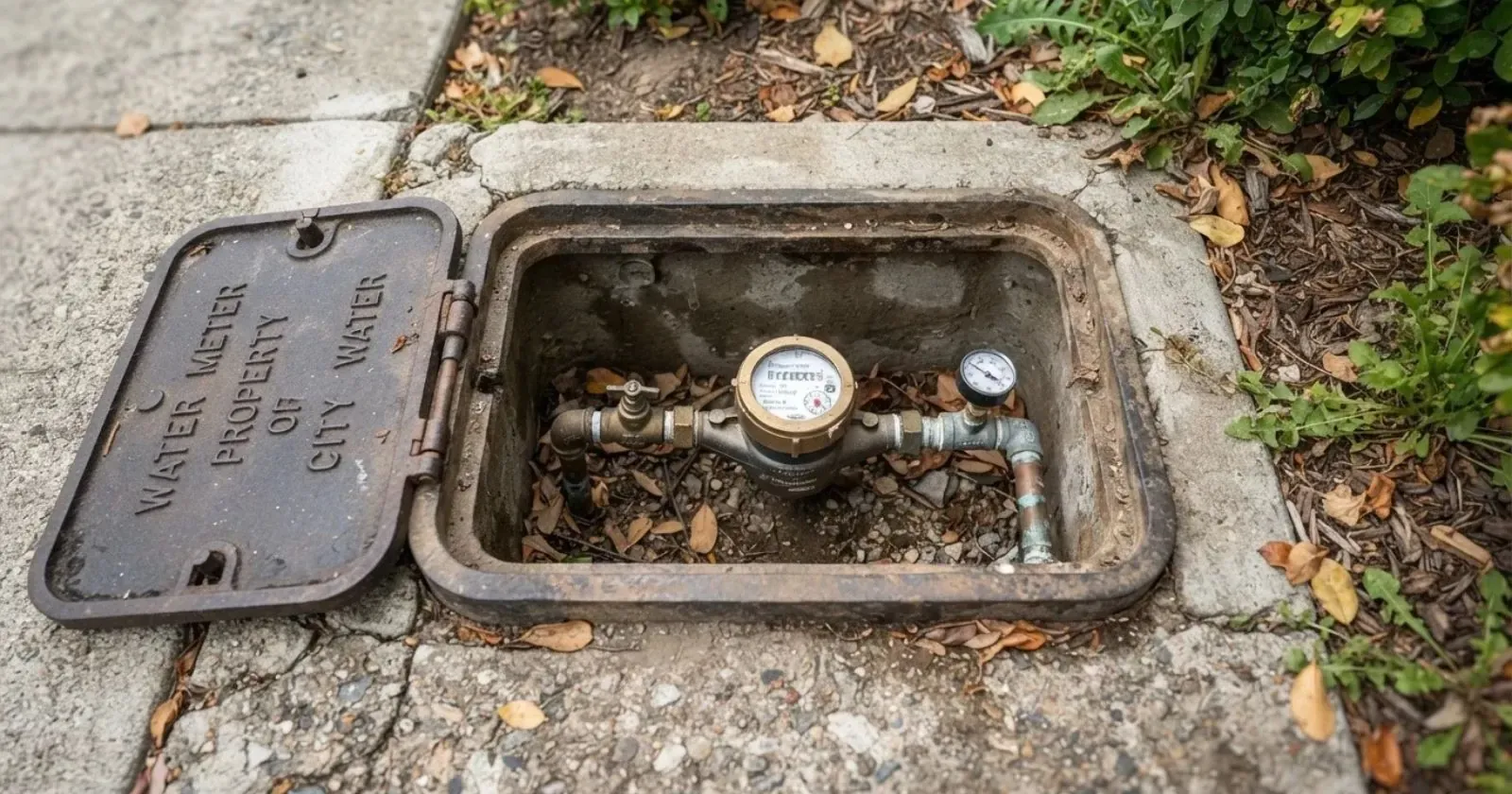
Some buildings keep the meter inside, often in a basement or utility room near the point where the water line enters. Others have it in an in-ground box near the sidewalk or curb, under a lid. Look for a small metal or plastic cover set into the ground, and lift it carefully with a screwdriver, because dirt, insects and sometimes standing water can collect inside.
If you cannot find the meter, ask the property manager or look for where the main shutoff valve sits inside the building. Do not dig around a curb box or tamper with the valve beside the meter, because that equipment belongs to the utility. We can locate and read it with you if the box is buried or stuck.
Who Owns Which Part Of The Line
Responsibility changes at the curb box. According to the city's own water FAQ, the East Orange Water Commission is responsible for the line from the street to the curb box, and the owner is responsible for the line from the curb box to the home. That split decides who repairs a leak once we find it.
If the dial moves with everything off, the leak can be on either side of the curb box or inside the building. We test to tell which. When the problem is on the owner's side we price the repair with you, and when it is on the commission's side we give you the details to report to the Water Commission at 973-266-8869. Our water line repair page explains what repairing an owner's line involves.
Shared Meters In Multifamily Buildings
Many East Orange buildings with several apartments share one meter, and the owner or manager gets the bill. A tenant who sees higher charges may be paying a share of a leak in someone else's unit or in a common line. Tenants cannot shut off or test shared equipment, so the right first step is to tell the landlord and ask for a building-wide check.
For managers, the test works the same way but takes planning. Have each unit confirm that fixtures are off and no one is flushing, then read the meter. If it still moves, we walk the building to separate units, risers, boiler fill lines and any common outdoor taps. Our commercial plumbing page covers how we work in larger properties.
Reading A High Bill Honestly
A bill is a record of what the meter measured, plus whatever charges the utility applies. We do not know how a given bill was calculated, and we will not guess at rates, billing periods or how your charges were figured. Those are questions for the Water Commission at 973-266-8869, which can explain a bill line by line.
What a plumber can do is tell you whether water is leaving your pipes. If the meter test shows no movement and every toilet passes, the plumbing is likely sound, and the bill question belongs with the utility. If the meter moves, you have a physical leak and fixing it comes first. We do not promise that any bill will be reduced or adjusted, and you should ask the Commission what options exist for your account.
Common Causes Of A Jump In Water Use
Toilets lead the list, followed by a long list of ordinary sources. A hose bib left dripping, an irrigation line with a cracked fitting, or a water heater relief valve that weeps through its discharge pipe can each add up over weeks. A water softener or humidifier with a stuck drain line will run quietly until someone checks.
The service line is the cause nobody sees. A pinhole or a failed joint between the curb box and the building can leak into soil for a long time, and the ground may show only a soft patch. Older pipe is more likely to fail, and the city's draft housing plan notes that 29.8 percent of occupied homes were built in 1939 or earlier.
- Toilet flapper or fill valve leaking into the bowl.
- Outdoor hose bib or irrigation fitting dripping.
- Water heater relief valve discharging into a drain.
- Water softener or humidifier drain stuck open.
- Service line leak between the curb box and the building.
- Dripping faucet or failed shutoff valve behind a fixture.
What We Do On Site
We start with the meter and the toilets, because they are quick and often solve the question. A technician repeats the no-use test, reads the dial and then isolates the building by closing valves one section at a time to see where the flow stops. That narrows the problem to a fixture, a branch, the service line or the meter itself.
Where a leak is hidden, we use pressure checks and listening equipment to locate it before opening any surface. Our leak detection page describes the tools in more detail. Where the evidence points to a buried line, we tell you what a repair or replacement involves, and where it points to the utility, we say so and give you what we found in writing for the Commission.
One honest limit applies. A meter test shows that water is leaving but not always how much or exactly where. We confirm on site, and we do not promise a diagnosis without a visit when the cause is buried.
Which Method Fits Which Symptom
| Symptom | Likely cause | What we check |
|---|---|---|
| Dial spins with everything off. | Pipe leak or stuck valve. | Isolate sections, pressure test and listen on the line. |
| Dial ticks every few minutes. | Toilet refilling by itself. | Dye test, flapper and fill valve. |
| Meter moves, building seems dry. | Service line or buried leak. | Curb box test and line location. |
| No movement, bill still high. | Billing or usage question. | Refer to the Water Commission at 973-266-8869. |
What Leak Checks Cost: The Pricing Factors
We give a clear price before work starts, and we do not quote a number by phone for a problem we have not seen. Five things move the price.
Meter Checks Near East Orange
We handle high bill and leak questions across Orange, Newark, Bloomfield, West Orange and Irvington. East Orange water is supplied by its own Water Commission from wells in the Passaic aquifer, not by Newark, so bill questions for an East Orange address go to the Commission.
If you are not sure whether your problem is a leak or a billing matter, run the ten minute test and call (973) 488-5410 with the result. A simple answer on the phone often tells us which visit you need, and the next step is rarely guesswork.