
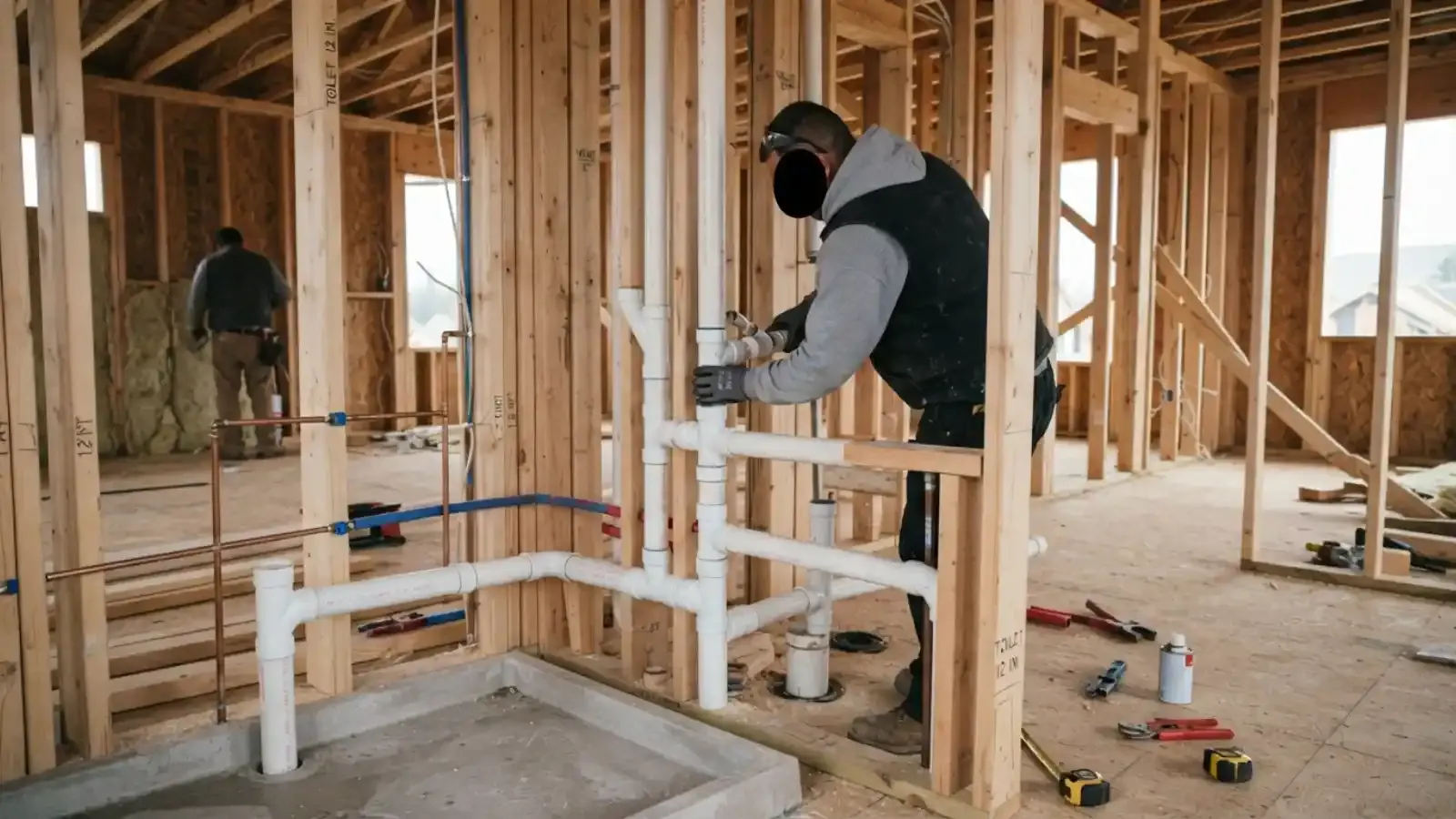
New plumbing work is planned work, and most of the savings come from planning it well. A new fixture, a bathroom remodel or a basement bathroom each involves supply lines, drains, vents and a final inspection. We install what you have chosen, tell you early what the building requires and schedule the work so inspections fit.
Call (973) 488-5410 to describe the project. We ask what fixtures are involved, where the existing pipes are and what the building is, because a first-floor unit and a third-floor unit in the same building do not have the same options.
What We Install
We install toilets, sinks, faucets, tubs, showers, kitchen fixtures and utility sinks, along with the supply stops, drains and vents behind them. We also connect appliances such as dishwashers, clothes washers, ice makers and water filters. For water heaters, see our water heater installation page.
Fixture replacement that keeps the existing pipes in place is simpler than moving fixtures. Moving a toilet or a sink to a new spot means new drain and vent lines, and that changes the scope, the permit and the schedule.
Bathroom And Kitchen Remodels
A remodel is the best time to fix old plumbing. With walls open, we can replace corroded supply lines, add proper shutoffs and correct awkward drain slopes at a fraction of what it would cost later. We work with your contractor so rough-in happens before walls close.
Tell us the fixture layout early. The location of a toilet flange, a shower valve or a kitchen drain decides where pipes need to go. Changing the plan after rough-in means opening finished work, which costs time.
Basement Bathrooms
A basement bathroom is a common project and a tricky one, because the drain may sit below the level of the building's sewer line. When that is the case, waste cannot flow out by gravity, and the bathroom needs a sewage ejector or similar pump. Whether your basement is above or below the line is something we check on site.
Basements also have water in them at times. East Orange's master plan names basement flooding during Superstorm Sandy in 2012, so protection from water entering a basement is worth thinking about. Our sump pump page covers that, and it is worth pairing with a basement bathroom plan.
Appliance And Utility Hookups
Dishwashers, washing machines, ice makers and filters all need a supply line, a drain and a shutoff you can reach. We install proper valves and connections, and we check that drains are the right height so water does not siphon or back up. Old rubber hoses can split without warning, so we suggest braided stainless lines when they fit.
If an appliance needs a new outlet or a vent, that is electrical or mechanical work we do not do. We tell you what to arrange so the day goes smoothly.
Rough-In And Inspection
Rough-in is the stage when pipes are in place but walls are open. Drain, vent and supply lines are installed, pressure tested and inspected, and only then do walls close. Getting that order right avoids opening finished walls.
Inspections are scheduled with the Building Division. We tell you when rough-in will be ready for inspection and again when fixtures are set, so you know where the project stands.
Permits And Who May Do The Work
Under New Jersey rules, plumbing work must be done by a master plumber or an authorized plumbing contractor, as set by N.J.A.C. 13:32-3.3. The permit application lists the contractor's license number, and the permit is signed by the licensee. Like-for-like replacement of a fixture with no change to the piping is ordinary maintenance in a single-family dwelling, but adding or relocating fixtures is not.
The rules include an exemption for a single-family homeowner working on his or her own dwelling. If you are considering that, confirm with the East Orange Building Division at 973-266-5320 at City Hall, 44 City Hall Plaza, before you start. In a rental or multifamily building the owner or manager should be involved from the start.
Working In Apartments And Older Buildings
East Orange is mostly multifamily. The city's draft housing plan says 38.1 percent of units are in buildings of 20 or more units, and 69 percent of homes are renter occupied. Plumbing work in an apartment often involves shared stacks and risers, so the manager or owner needs to be in the loop.
Older buildings also hold surprises. Walls may hide cast iron stacks, galvanized supply lines or unusual layouts. We check what is behind the wall where we can, and we tell you when something we find changes the scope. A good plan leaves room for that.
Tenants who want a new fixture should ask the landlord first, because the owner decides what changes are allowed and who pays.
Planning Checklist
- Decide on fixtures and bring model numbers, because rough-in depends on them.
- Confirm with a landlord or condo board what is allowed before you plan.
- Mark where the shutoffs are and make sure they work.
- Plan the layout so fixtures stay near existing drains and vents when possible.
- Ask whether the project needs a permit and who will pull it.
- Set aside time for inspections between stages.
What Plumbing Installation Costs: The Pricing Factors
Plumbing Installation Near East Orange
We install plumbing across Orange, Newark, Bloomfield, West Orange and Irvington. If your project involves replacing old supply pipes, ask about repiping at the same time.
Code And Standards Reference
New plumbing work in New Jersey follows the Uniform Construction Code plumbing subcode (N.J.A.C. 5:23-3.15), which the state Department of Community Affairs lists as the National Standard Plumbing Code, 2024 New Jersey edition. The permit application must carry the plumbing contractor's license number.