
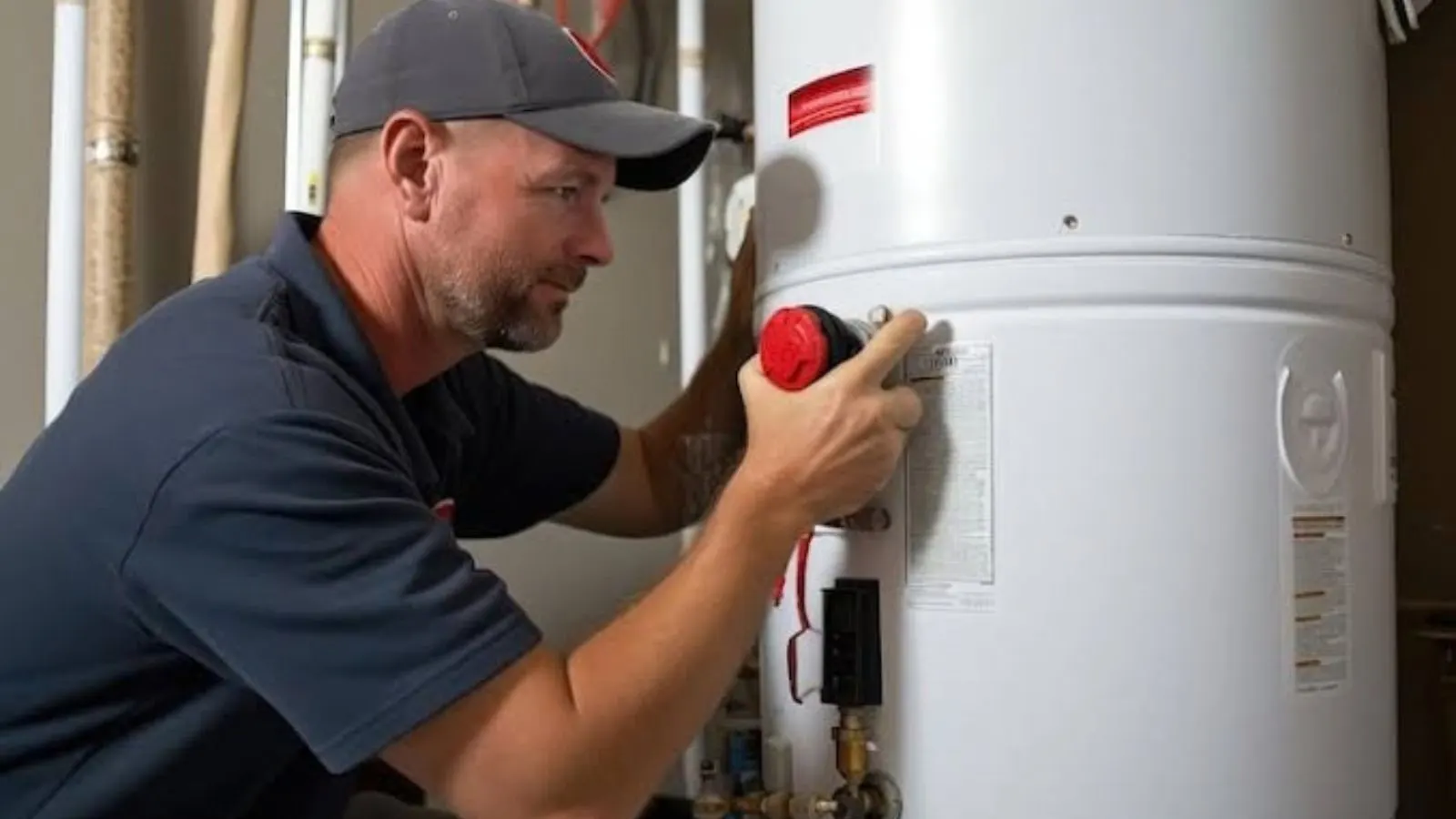
When a water heater dies on a Tuesday night, the question is not which model is best in theory. It is how fast the building can have hot water again, and what the job involves. In East Orange that question lands on a lot of people at once, since most homes are rented and many tanks serve a whole building. We replace gas and electric water heaters on an emergency basis.
A same-day replacement is realistic when the new unit is a like-for-like swap and the venting, gas line and water connections are in good shape. It takes longer when the old setup needs changes, such as new venting or a different fuel. Parts availability and building access also set the pace, and we say so plainly. We tell you which situation you are in after we look at the existing install, and we state the price before we start.
Tank Failed Or Flooding? Do This Before We Arrive
A failed tank that is still leaking needs the same quick shutdown as any other water heater leak. These steps take a few minutes and limit the damage.
Shut off power or gas
Switch off the breaker on an electric heater. On a gas heater, set the control to off or close the supply valve.
Close the cold inlet valve
The valve on the cold line above the tank stops new water from filling the leak. Close it fully.
Clear a path and a floor
Move stored items away from the tank and out of the stairwell so the crew can carry in the new unit and carry out the old.
Note the label details
Photograph the tank label with its capacity, fuel and model number. It helps us bring the right size and fittings.
If you smell gas, leave first. Go at least 350 feet from the building and call PSE&G at 1-800-880-7734 or 911, then call us from a safe distance.
How A Same-Day Replacement Works
The visit follows a set order. We confirm the diagnosis and the replace decision, shut off and drain the old tank, disconnect it and carry it out. Then we set the new unit, make the water, gas or electric connections, restore the venting and fill and test the tank before it is fired.
Before we leave, we check for leaks at every joint, confirm the burner or elements are working and show you the controls. We also explain the temperature setting and where the shutoff valves are, because the next person to need them may be you at midnight.
Sizing: Apartments Versus Houses
A tank that is too small runs out of hot water in the middle of a shower, and one that is too large wastes fuel keeping extra water warm. Sizing depends on how many people use hot water and when. A one-bedroom apartment and a two-family house need very different capacities.
Peak demand matters more than the daily total. A household that showers in a short morning window needs a higher recovery rate than one that spreads use through the day. For a building with shared tanks, we look at the number of units, the fixtures and what the old unit could and could not keep up with.
| Situation | What drives the size | What we look at |
|---|---|---|
| Single apartment | Few people, one or two bathrooms. | Capacity that covers the morning peak without oversizing. |
| Two-family house | Two households, often stacked bathrooms. | Recovery rate and whether to serve units separately or together. |
| Small multifamily with shared tank. | Many fixtures sharing one source. | Loop demand, existing capacity and whether the old size was undersized. |
| Replacing gas with electric or the reverse. | Fuel availability and electrical capacity. | Service panel, gas line size, venting and conversion work. |
Removal, Disposal And Access In Older Buildings
The old tank comes out with us. We drain it, cut it free and carry it out for recycling or disposal as part of the job, so you are not left with a rusted shell in the basement. If a landlord or property manager needs a record of the swap, we write up the new unit's model and the date of installation. Tell us about stairs, tight turns and elevator limits when you call, because a 40 or 50 gallon tank is heavy and awkward.
East Orange has many older buildings where the heater is in a low basement room or a narrow utility closet. The city's own housing data puts the median home at 1957 construction, and 29.8 percent of occupied homes date to 1939 or earlier. In those buildings, access and old piping are part of the work, not surprises.
Corroded shutoff valves are a common snag. A valve that will not close or will not hold is replaced before the new tank is connected, since a weeping valve under a new heater is a leak waiting to happen. We tell you about that cost when we see the valve, not after the work.
Venting, Gas And Electric Considerations
A like-for-like gas swap reuses the existing flue and gas line when they are sound. If the flue is corroded, undersized or poorly pitched, we recommend correcting it before the new tank runs. Combustion air matters too, since a heater in a sealed room can run poorly or unsafely.
Switching fuel changes the scope. Gas to electric needs a circuit and capacity at the panel, and electric to gas needs a gas line and a vent path. We look at the existing connections first and explain what a conversion would add.
Permits And Inspection
Water heater replacement does not appear in the ordinary maintenance list in New Jersey's construction code rule, N.J.A.C. 5:23-2.7, and replacement of gas piping and similar work is not treated as ordinary maintenance. Our reading, which is an inference and not a statement from the city, is that a permit is normally required. Call the East Orange Building Division at 973-266-5320 to confirm for your address.
New Jersey requires plumbing work to be done by a licensed master plumber or authorized contractor, and the permit is signed by the licensee. We handle that process, and we tell you what to expect for inspection.
Tank Or Tankless, And What About Rebates
A like-for-like tank is the quicker and usually less costly path in an emergency. A tankless unit changes the venting, gas supply and sometimes the electrical needs, so it is better as a planned project. Our tankless water heater page explains the trade-offs, and our water heater installation page covers new installs that are not an emergency.
On rebates, ask PSE&G and do not assume. The federal 25C credit ended for installs placed in service after December 31, 2025, so it does not apply to a replacement done now. PSE&G lists appliance rebates, but their status can change, so confirm eligibility with them before you buy and before you rely on any amount.
After The New Heater Is In
A new tank needs little, but a few habits extend its life. Set the temperature to a level that meets your needs without scalding, and test the relief valve discharge with a plumber at service time. In very hard water, schedule a tank flush and an anode rod check rather than waiting for noise or rust.
Keep the label details and the date of installation in a safe place. If you manage a building, record the install date for each unit, so replacement can be planned for the coldest part of the year before a failure forces it.
What Replacement Costs: The Pricing Factors
We quote after we see the existing install, never by phone for a job we have not looked at. These five things set the price.
Water Heater Replacement Near East Orange
We replace water heaters across Orange, Newark, Bloomfield, West Orange and Irvington, working from our Central Avenue base. If you are not sure whether a repair is enough, see our water heater repair page or call and describe what you see.
Code And Standards Reference
Replacement work follows the plumbing subcode of the New Jersey Uniform Construction Code (N.J.A.C. 5:23-3.15), listed by the state as the National Standard Plumbing Code, 2024 New Jersey edition. Because water heaters are not named in N.J.A.C. 5:23-2.7, a permit is normally required, which we confirm with the East Orange Building Division.