
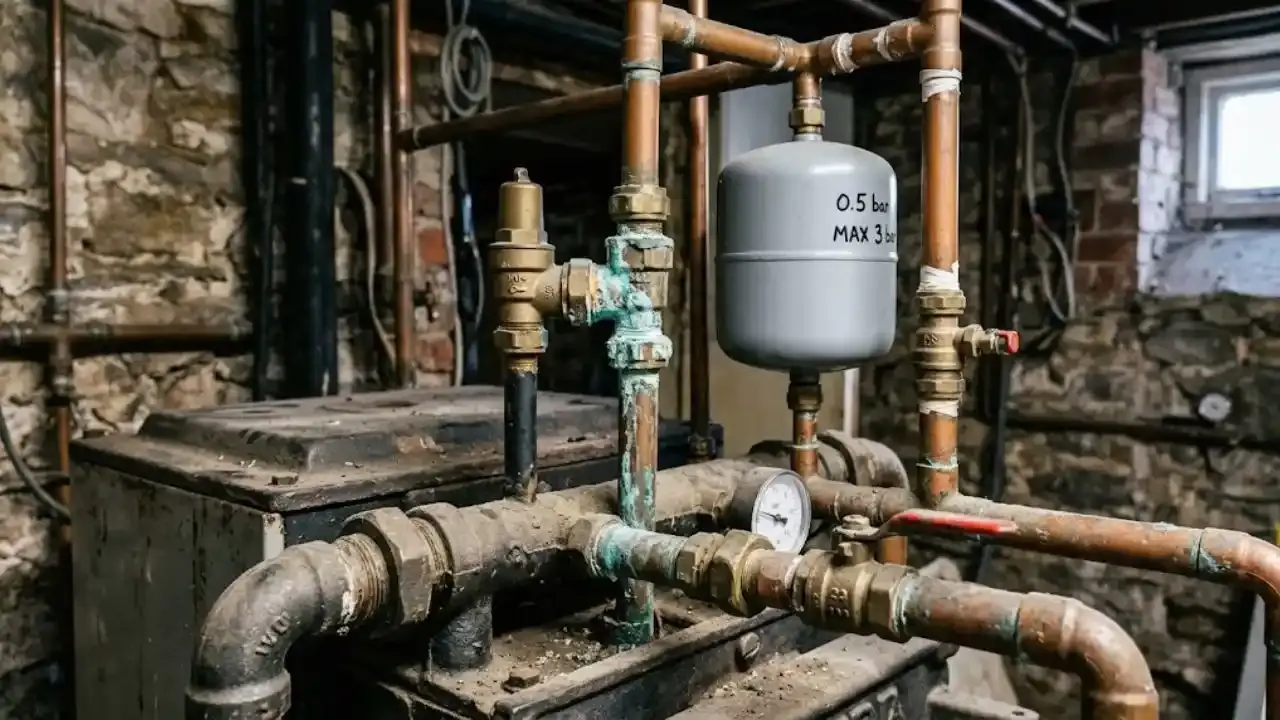
A boiler problem in East Orange is rarely one person's problem. The city's housing data shows a median build year of 1957 and 29.8 percent of occupied homes built in 1939 or earlier, and many of those buildings are multifamily. When the boiler fails in January, a whole building is cold, and the clock on a landlord's legal duty is already running.
We repair hot water and steam boilers in homes and multifamily buildings. We start with the symptom, find the cause and explain what we found in plain terms. That includes telling you when a repair makes sense and when it only delays a larger decision.
No Heat Or No Hot Water From The Boiler
A boiler that does not fire is one of the most common winter calls. The cause may be as simple as a tripped switch, a thermostat issue or low water. It may also be a failed ignitor, a dirty burner, a stuck circulator pump or a safety control that has locked out.
Before you call, check that the thermostat is calling for heat, the emergency switch is on and the fuel supply is open. If you smell gas, leave, go 350 feet away and call PSE&G at 1-800-880-7734 or 911. Do not repeat reset attempts, since a lockout is the boiler telling you something is wrong.
Banging, Kettling And Other Noises
Banging in a steam system often points to water trapped in pipes that are not pitched correctly, or to a problem with the pressure or the air venting. In a hot water boiler, a rumbling or kettling sound is often scale or sediment in the heat exchanger, where water boils in pockets. Gurgling can mean trapped air in the loop.
Noises are early warnings. Left alone, scale makes the boiler work harder and fail sooner. East Orange water is described by the city as very hard, so mineral buildup is a reasonable suspect in an older system.
Leaks And Low Pressure
A leaking boiler or a pressure gauge that keeps dropping needs prompt attention. Leaks come from a weeping relief valve, a corroded fitting, a failed circulator seal or a crack in the boiler itself. The first three are repairable, and the last one usually is not.
Low pressure can mean a leak somewhere in the loop, a failed expansion tank or an auto-fill valve that is not working. We find the source before topping the system up, because adding water to a leaking system only hides the problem and feeds corrosion. If water is on the floor, see our leak detection service.
Steam Or Hot Water: What Older Buildings Often Have
Given the age of the housing stock, many East Orange buildings will have older systems, and some are likely to be steam. We say this cautiously, because we do not know any one building's system until we see it. Ask the building owner or the last service record if you are unsure which type you have. Steam systems rely on pressure, venting and pitch, and hot water systems rely on circulators, valves and loops.
The distinction matters for repair. A steam system with stuck vents or a faulty pressure control behaves differently from a hot water system with an air problem. We identify the system type on the first visit and explain what we find.
| System | Typical symptom | Usual causes |
|---|---|---|
| Steam boiler | Banging pipes, uneven heat, water hammer. | Trapped condensate, stuck air vents, pressure control, low water cutoff. |
| Hot water boiler | Cold radiators, gurgling, cycling on and off. | Air in the loop, failed circulator, sediment, zone valve failure. |
| Either type, no heat at all. | Boiler will not fire. | Ignitor, thermostat, gas supply, safety lockout, power. |
| Either type, leaking | Drips, puddles or falling pressure. | Relief valve, fitting, pump seal, boiler section crack. |
Landlords: Heat Season Rules And Who Enforces Them
New Jersey's rule on heat is N.J.A.C. 5:10-14.4. The heat season runs from October 1 to May 15. Within it, rental units must be kept at least 68 F between 6 a.m. and 11 p.m. and at least 65 F between 11 p.m. and 6 a.m.
Enforcement depends on the building. The state tenant bulletin says a lack of heat or hot water is reported to the local health agency. For buildings with three or more rental units, the Department of Community Affairs Bureau of Housing Inspection at 609-633-6227 also handles complaints.
That puts pressure on a quick repair. When a boiler fails, call us at (973) 488-5410 and keep a record of the time of the outage and what you did. We document what we found and what we fixed, which helps if the health agency or an inspector asks.
Seasonal Care And Planning Ahead
Most winter boiler failures show early signs. Uneven heat in the fall, a pilot that is slow to catch or a pressure gauge that creeps down each week all say the system is being stressed. A service visit in September costs less than an emergency call in January.
North New Jersey sees about 80 days a year at or below 32 F, and January nights average about 25 F at Newark. A boiler that struggles in October will not cope with that. If you own a multifamily building, book the check before the heat season opens on October 1. We look at the burner, the controls, the pressure and the circulator and report what needs attention.
Repair Or Replace Decisions
A boiler with a failed pump or ignitor is usually worth repairing. A boiler with a cracked section, severe corrosion or repeated failures may not be. We tell you which case you have and what the options are.
If your issue is hot water supply rather than heat, see our water heater repair page. For a piping problem behind the boiler, our repiping service may be the longer-term answer.
What Boiler Repair Costs: The Pricing Factors
We state the price before work starts and do not quote for problems we have not diagnosed.
Boiler Repair Near East Orange
We repair boilers across East Orange and in Orange, Newark, Bloomfield, West Orange and Irvington. Property managers can read how we handle multi-unit buildings on our commercial plumbing page.
Code And Standards Reference
Boiler and heating work is regulated under the New Jersey Uniform Construction Code. Per the state's code list, the plumbing subcode (N.J.A.C. 5:23-3.15) now points to the National Standard Plumbing Code, 2024 New Jersey edition. Confirm the permit requirements for a specific boiler job with the East Orange Building Division.