
When a main sewer line clogs, everything in the building stops draining together. The first floor toilet gurgles, the basement floor drain bubbles and the tub in the back unit fills with gray water. That pattern points past the fixtures to the main line, and it needs a different tool than a sink snake.
We clean main sewer lines at any hour in East Orange. A technician opens the line at a clean-out, runs a machine sized to the pipe, and confirms the line is flowing before leaving. If the line is damaged or keeps clogging, we say so rather than cleaning it again and again.
Main Line Backing Up Right Now?
A main line clog gets worse every time a drain runs. These steps hold the water down until we arrive.
Stop all water use
No flushing, showers, laundry or dishwasher cycles. Tell every unit connected to the same line.
Find the clean-out
It is usually a capped pipe near the foundation, in the basement or by the street side wall. Clear the area around it so the crew can reach it.
Leave the cap alone
Do not open a clean-out under pressure. Standing water behind the cap can spill out fast.
Call and describe the pattern
Tell us which fixtures back up and which still work. That points us to the main line or a branch.
How We Clean A Main Sewer Line
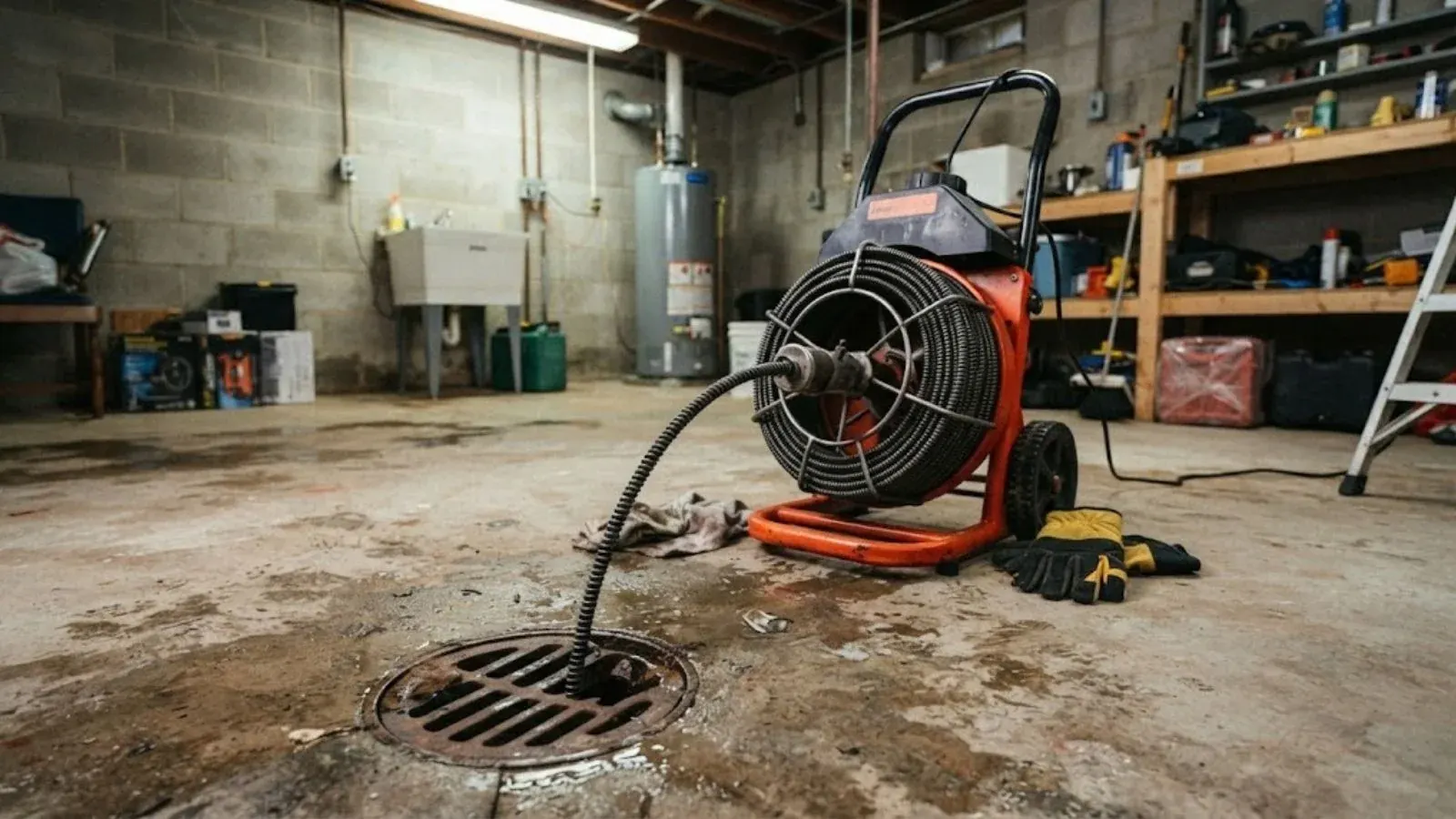
We start at the clean-out. A large sectional cable machine with a cutting head goes in and works through the blockage, with the cutter chosen for what we suspect, such as grease, roots or a soft mass of paper and wipes. As the line opens, the water drains and we run the cable through again to clear the remaining buildup.
After the line is moving, we flush it and test several fixtures at once. A line that drains one fixture but backs up under a full load is not clear, and we keep working until it handles real use. If the pipe is sound and the buildup is heavy, we recommend hydro jetting to scrub the wall.
Clean-Out Locations, And What To Do If There Is None
A clean-out is a capped access point on the sewer line. In older East Orange buildings it is commonly in the basement near where the main leaves the house, on a wall or floor near the foundation. Some buildings have one outside as well.
A building with no clean-out takes more effort. We may need to pull a toilet or go through a roof vent to reach the line, and both are slower. If the line has no access, we recommend installing a clean-out so the next cleaning is simple. That is a small plumbing job that pays back the first time the line needs service.
What Clogs Main Lines In Older Buildings
Roots, grease and wipes cause most main line stoppages, and each behaves differently. Roots enter through joints in older clay laterals and grow into a mat that catches everything else. Grease coats the pipe wall and narrows it from inside. Wipes sold as flushable do not break down like paper and gather into rope-like masses.
Multifamily use sharpens each one. A building with many apartments sends cooking grease from every kitchen down the same stack, and the hard water in the city, which the city's own page calls very hard, leaves scale that gives all of it a rough surface to catch on. Cast iron and clay from the 1950s and earlier, which the city's housing data suggests are common here, roughen over decades.
| Cause | Sign | Typical approach |
|---|---|---|
| Roots | Repeat clogs every few months, gurgling. | Cutting head, then a camera check for open joints. |
| Grease | Slow drain across several fixtures, odor. | Cable, then jetting if the pipe is sound. |
| Wipes and paper | Sudden total stoppage | Cable to break up and pull the mass. |
| Broken or sagging pipe. | Clogs that return soon after cleaning. | Camera first, then repair. |
Scheduled Maintenance Cleanings For Multifamily Owners
About 69 percent of East Orange homes are renter occupied and 38 percent of units are in buildings of 20 or more units, according to the city's draft housing element. For an owner of a building like that, one backup means several unhappy tenants and sometimes damaged belongings. A scheduled cleaning of the main line on a regular cycle costs less than repeated emergency calls.
We set the interval based on what the line shows, not a fixed calendar. A building with heavy kitchen use or known roots needs more frequent visits than one with few units. Call us and we will talk through a plan. Our commercial plumbing page covers the wider multi-unit services.
When Cleaning Is Not Enough
Cleaning removes what is in the pipe. It does not repair the pipe. If a line clogs again soon after cleaning, a camera inspection is the next step, since a crack, offset or sag will keep catching debris. Our sewer camera inspection shows what is happening inside the line.
If the camera finds structural damage, the fix is a sewer line repair. Cleaning that line again would waste money. We tell you which case you have before we recommend anything beyond a first clearing.
Sewer Line Cleaning, Drain Cleaning And Hydro Jetting: How They Differ
Drain cleaning usually means a fixture or branch line, such as a sink, tub or floor drain, cleared with a small machine. Sewer line cleaning means the main line that carries the whole building's waste to the street, cleared with a larger machine through a clean-out. Hydro jetting uses high pressure water instead of a cable, and scrubs the pipe wall rather than cutting through a blockage.
Many jobs combine them. A cable opens a main line quickly, and jetting follows when buildup is heavy and the pipe is sound. We pick the tool from what the line is doing, not from a standard routine.
What Sewer Line Cleaning Costs: The Pricing Factors
We state the price after we know what the line needs. These five things move it.
Sewer Line Cleaning Near East Orange
We clean main lines across Orange, Newark, Bloomfield, West Orange and Irvington. One 24/7 number reaches us for any of those addresses.