
A wet basement has a cause, and the right fix depends on finding it. Some water comes through the foundation wall, some rises under the slab, some drains in from a backed-up line and some is just a plumbing leak that looks like groundwater. We start by working out which one you have.
We are plumbers. That means we handle the parts of basement water control that involve pipes, drains and pumps, and we say plainly when the job belongs to someone else. Call and describe where the water appears and when, and we will tell you what to expect.
Is It A Crack Or A Plumbing Leak? A Leak Test First
Before anyone cuts a slab, rule out a plumbing leak. A leaking supply line, a failed drain joint or a weeping water heater can wet a basement floor and mimic seepage. A leak test, using a meter check and pressure test, shows whether a pipe is the source.
If water appears only after rain, the cause is usually groundwater or surface water. If it appears in dry weather, a pipe is the first suspect. Our leak detection service covers this, and it is worth doing first because it costs far less than a waterproofing system you did not need.
Interior Drainage: How It Works
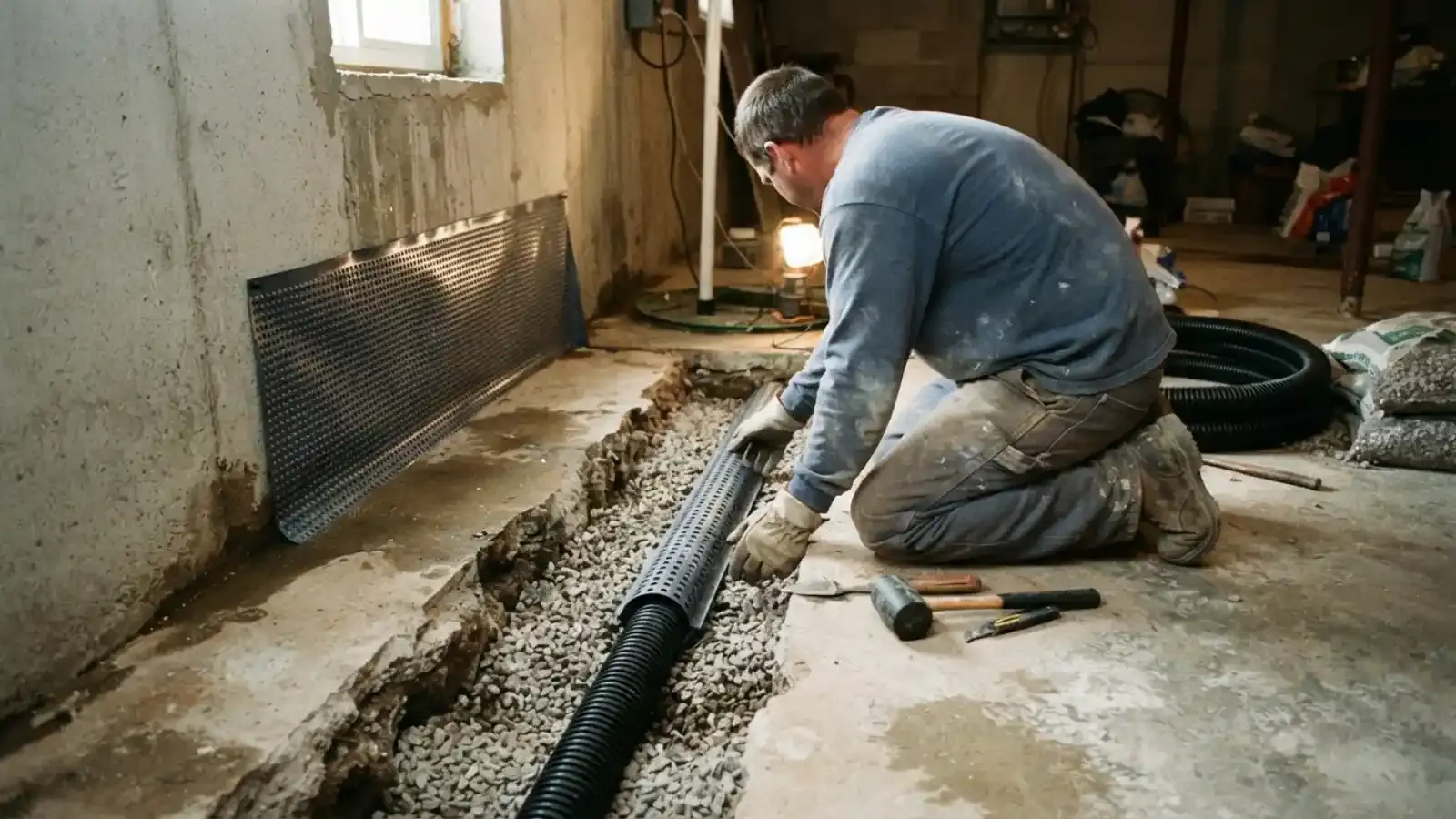
An interior drainage system catches water that gets under or through the slab and sends it to a sump pit. A trench is cut along the inside edge of the floor, perforated pipe is laid in gravel and the floor is patched over it. Water enters the pipe and flows to the pit, where a pump moves it out.
A wall panel may sit along the foundation wall to direct moisture down into the trench. The picture of this work is a trench along the base of the wall with a perforated pipe in gravel. It handles water after it enters the basement, rather than stopping it outside.
Sump Pits And Pumps In The System
The pit is the collection point and the pump is what moves water out. A drainage system is only as good as its pump, so we size the pit and pump together and plan a backup for storms. See sump pump installation and repair for the details.
The discharge location matters. Confirm discharge rules with the Building Division at 973-266-5320 before connecting anything, since we do not state those rules here.
| Water source | Typical sign | Plumber's role |
|---|---|---|
| Plumbing leak | Water in dry weather, rising meter. | Find and repair the leak. |
| Groundwater under the slab. | Water at the floor edge after rain. | Interior drainage and a pump. |
| Wall seepage | Damp or streaked wall. | Interior drainage. Exterior work is referred. |
| Sewer backup | Water from a floor drain, odor. | Clean or repair the line, add a backwater valve. |
| Grading or gutters | Water entering near one wall. | Referred to a grading or exterior contractor. |
Floor Drains And Backwater Valves
A floor drain is the basement's relief valve, and in a heavy rain it can also be the route for a backup. When the downstream system fills, water can come up through the drain. A backwater valve in the line lets waste go out but closes if water tries to come back in.
A valve needs maintenance, since debris can hold the flap open. We install and service them as part of the drain system, and check them against the building's pipe layout. If the backup is a clog and not a storm, sewer line cleaning is the first step.
Flooding Along The Second River And Nishuane Brook
The city's 2018 master plan says flooding occurs along the Second River, which it also calls the Watsessing River, and Nishuane Brook. It also notes a FEMA regulatory floodway near Watsessing and Soverel Parks, and it names basement flooding throughout the city as a Superstorm Sandy effect.
We do not map flood risk for your address. If your building is near those waterways, check its flood status with the city before planning work. For a building in a flood-prone area, a pump with battery backup and a backwater valve are the plumbing measures that matter most. Hurricane Ida in 2021 set a rainfall record in nearby Newark, a reminder that a sudden burst can overwhelm drains.
What To Expect On A Basement Visit
We look at where the water shows up, how the floor and walls look and where the drains and pit sit. We check the meter and run a leak test when a pipe is a possible cause. You tell us when the water appears, since after-rain and dry-weather patterns point to different sources.
From there we describe the options in plain terms and say which parts are plumbing and which are not. A written scope follows, and you decide what to approve.
Honest Limits: What We Do And Refer
We are plumbers, not structural or exterior contractors. We handle leak tests, interior drains, sump pits and pumps, ejector pumps, backwater valves and drain lines. We do not repair foundation walls, regrade a yard, install exterior membranes or fix structural cracks.
If we find that the water comes from grading, gutters or a foundation crack, we tell you and refer you to the right trade. That may save you from paying for a drain system that does not address the cause. We also tell you when a crack looks like a structural concern and needs an engineer's eyes.
What Basement Waterproofing Costs: The Pricing Factors
We explain the price after we see the basement. These five factors decide it.
Basement Water Help Near East Orange
We work on basements in Orange, Newark, Bloomfield, West Orange and Irvington. If water is rising right now, call our emergency sump pump line and we will respond.
Code And Standards Reference
Changes to drain, sump or discharge piping fall under the plumbing subcode of the New Jersey Uniform Construction Code (N.J.A.C. 5:23-3.15), which the state Department of Community Affairs now lists as the National Standard Plumbing Code, 2024 New Jersey edition. Wall repair, grading and other structural work are separate trades, so confirm those with the Building Division.