
A slab leak is a leak in a water pipe that runs in or under a concrete floor. You cannot see the pipe, so the first sign is usually something strange on the floor above it. A warm patch, a damp edge on the carpet, or a water bill that jumped for no reason are the common ones. We respond to suspected slab leaks at any hour.
One honest point before anything else. We could not verify how many East Orange buildings sit on slabs, how many have basements and how many have crawlspaces. Many older homes and apartment buildings here have basements, and in those the main water pipes usually run overhead where they can be seen. This page applies to ground floors over concrete, additions, garages and slab-on-grade buildings.
If you are not sure what is under your floor, call and describe the building. We ask a few questions, then tell you whether a slab leak is likely or whether the water is coming from somewhere easier to reach. Many calls that start as a slab leak turn out to be a wall, ceiling or basement pipe, and that is good news for the repair.
Signs That Point To A Leak Under The Floor
The signs fall into a few groups, and one alone is rarely proof. Two or three together make a slab leak much more likely. A technician will ask which of these you have noticed and when each one started.
A warm spot on the floor is the classic one, especially in a room with no heating pipe or sunny window. Hot water leaking under concrete warms the slab above it, and bare feet notice before eyes do. A hissing or trickling sound late at night, when the building is quiet, points the same way.
The meter is the most reliable clue. If every fixture and appliance is off and the dial or the small flow indicator still moves, water is leaving the system somewhere. Mold, a musty smell, lifted laminate or wood flooring, and baseboards that stain from the bottom up are the slower signs that moisture has been rising for a while.
Look Before You Panic: Other Causes That Mimic It
A warm floor can also come from a heating pipe, a nearby water heater, a dryer vent or direct sun. A damp floor can come from a sweating cold pipe, a failed window or door threshold, groundwater after heavy rain, or a drain line instead of a supply line. The city master plan names basement flooding during Sandy in 2012, and Newark's record rainfall during Ida in 2021 showed how fast water finds low spots in this area.
That is why we test before we blame the pipe. A slab leak diagnosis that skips the testing step can send you into an expensive floor repair for water that came from somewhere else. If the water turns out to be a high bill with no visible cause, our water meter and high bill leak detection page explains the first steps in more detail.
How A Slab Leak Is Confirmed
We work from the cheapest, least invasive test toward the more specialized ones. Each step narrows the search, and the order matters because an early result can save you the later ones. We do not open a floor on a hunch.
The first step is a pressure test. We isolate the water line at the meter side and the building side, then watch whether the pressure holds. A drop tells us the leak is in the pipe and not in a fixture. We can often split hot from cold by closing the water heater outlet, which tells us which line to follow.
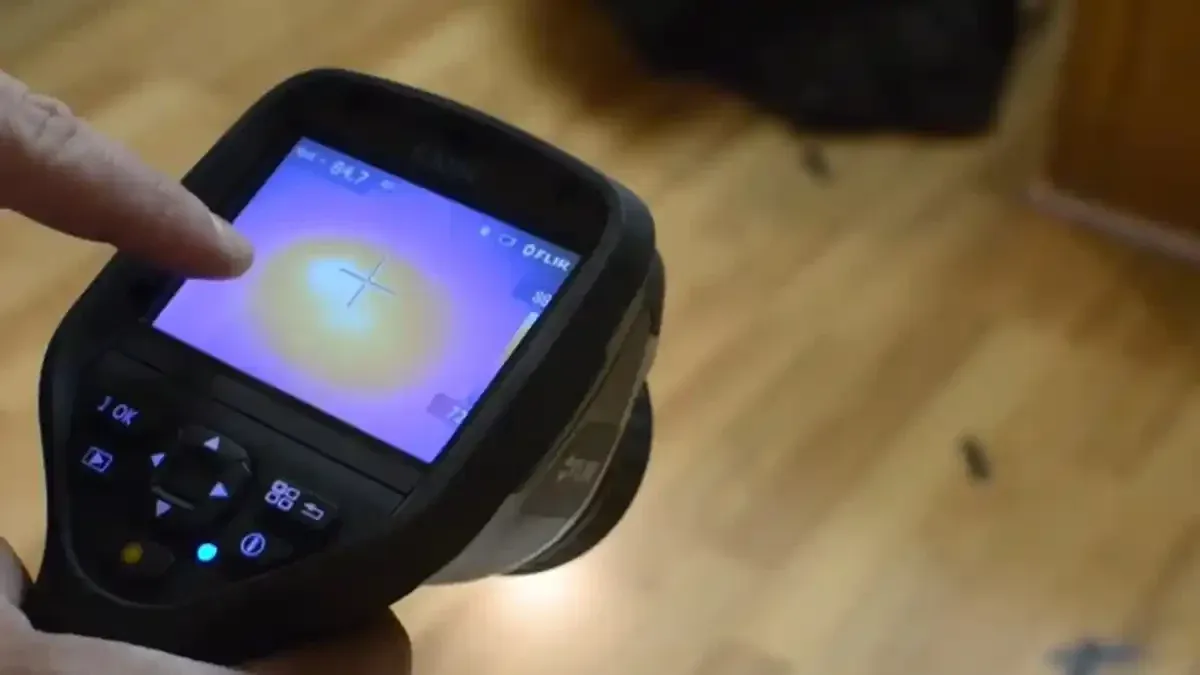
Next comes acoustic listening. Sensitive microphones and ground sensors pick up the sound of water escaping a pressurized pipe, and the sound is loudest directly above the break. A thermal camera adds a second view, because hot water leaks show as a warm shape against cooler concrete. Where a drain line is also suspected, a small camera can be run through the pipe to look for cracks and offsets.
| Method | What it tells us | Honest limit |
|---|---|---|
| Pressure test | Whether the pipe is losing water, and whether hot or cold. | Does not say where along the pipe the leak sits. |
| Acoustic listening | The likely spot on the floor, marked in chalk or tape. | Traffic, pumps and noisy plumbing can mask the sound. |
| Thermal imaging | Warm patches from hot line leaks. | Cold line leaks show little heat, and radiant heat can fool it. |
| Drain camera | Cracks or breaks inside a drain line when that is the suspect. | Looks at drain pipes only, not pressurized water lines. |
Repair Options And Their Limits
Once the leak is located, you have a few ways to fix it. None is right for every building. We explain the choice using what the tests showed, and we tell you when we are not certain.
Break-out is the direct fix. We cut and remove a small section of concrete over the leak, repair or replace the pipe and patch the slab. It is the most certain repair because we see the damage, but it means dust, noise and floor finishes that need redoing.
Rerouting abandons the buried section. A new line is run through walls or the ceiling space to the same fixtures, and the old pipe stays in the slab, capped. This suits buildings where several buried sections are failing, though it means opening walls, and it is closer to a small repiping job than a spot repair.
Lining or coating the pipe from the inside is possible in some situations. It avoids breaking concrete, but it needs a clear pipe path and a pipe sound enough to hold the liner. It is not a fit for every line, and we will say so when it is not.
What To Do Right Now: The Prep Cards
If you suspect water under the floor, a few quick steps limit the damage while you wait for a technician. None of them needs tools.
Shut off the main
Turn the building main valve clockwise to close it. If water stops sounding in the pipes, you have confirmed the leak is on the pressurized side.
Check the meter
With every tap and appliance off, look at the meter. Note the reading and the time so we can compare it when we arrive.
Lift what you can
Move rugs, boxes and furniture off damp or warm flooring. Open windows to move air through the room.
Keep the power safe
If water is reaching outlets or appliances, stay out and shut that circuit at the panel only if the panel is dry and you can reach it safely.
If you smell gas at any point, that is a different emergency. Leave the building, go 350 feet away and call PSE&G at 1-800-880-7734 or 911. Water problems can wait a few minutes for that call.
Then call us at (973) 488-5410 and tell us what you found. Photos of the meter and the damp area help, and so does knowing whether the building is a house, a two or three family or an apartment building with a landlord.
What Affects The Price Of A Slab Leak Repair
We give a clear price before work starts, and we cannot quote a number for a hidden leak by phone. Several things move the price, and we explain each one on site.
Water damage, mold and flooring are separate from the plumbing repair. Insurance policies differ on what they cover for hidden leaks, so read your policy and ask your insurer directly. We can write up what we found and what we did so you have a record to share with them.
Rules, Permits And Who Owns What
Plumbing work in New Jersey must be done by a licensed master plumber, and a permit for the work is signed by that licensee. Fixing a leak in an existing pipe is ordinary maintenance under N.J.A.C. 5:23-2.7, but replacing or rerouting piping is a different matter. Call the East Orange Building Division at 973-266-5320 to confirm what applies to your job.
The owner is responsible for the water line from the building to the curb stop, and the commission is responsible from the curb box to the street. If your leak turns out to be outside the foundation, the water line repair page covers that side, and the East Orange Water Commission at 973-266-8869 is the office to call about the street portion. Before any digging outside, NJ One Call at 811 marks underground utilities.
Tenants, Landlords And Multi-Unit Buildings
The city's draft housing element counts about 69 percent of occupied homes as renter occupied, and 38.1 percent of units in buildings of 20 or more. That means a slab leak is often a landlord's repair and a tenant's emergency. If you rent, report the signs to the owner right away, note the meter reading if you can reach it and keep photos with dates.
If you manage a building, we can look at ground-floor units, garages and common areas together. Our leak detection service covers the wider search when the water may be coming from more than one place, and our burst pipe repair page applies when a failed line is actively flooding.
Slab Leak Repair Near East Orange
We also respond to suspected slab and floor leaks in nearby towns. Crews head to Orange and Newark regularly, and the same 24/7 line covers Bloomfield, West Orange and Irvington. Wherever the address, we start with the meter and the testing, then tell you what the evidence shows before anyone opens a floor.
Code And Standards Reference
Breaking out a slab or replacing buried supply piping is more than ordinary maintenance under N.J.A.C. 5:23-2.7. The work follows the plumbing subcode (N.J.A.C. 5:23-3.15), which the state lists as the National Standard Plumbing Code, 2024 New Jersey edition. Confirm the permit for a specific job with the East Orange Building Division.