
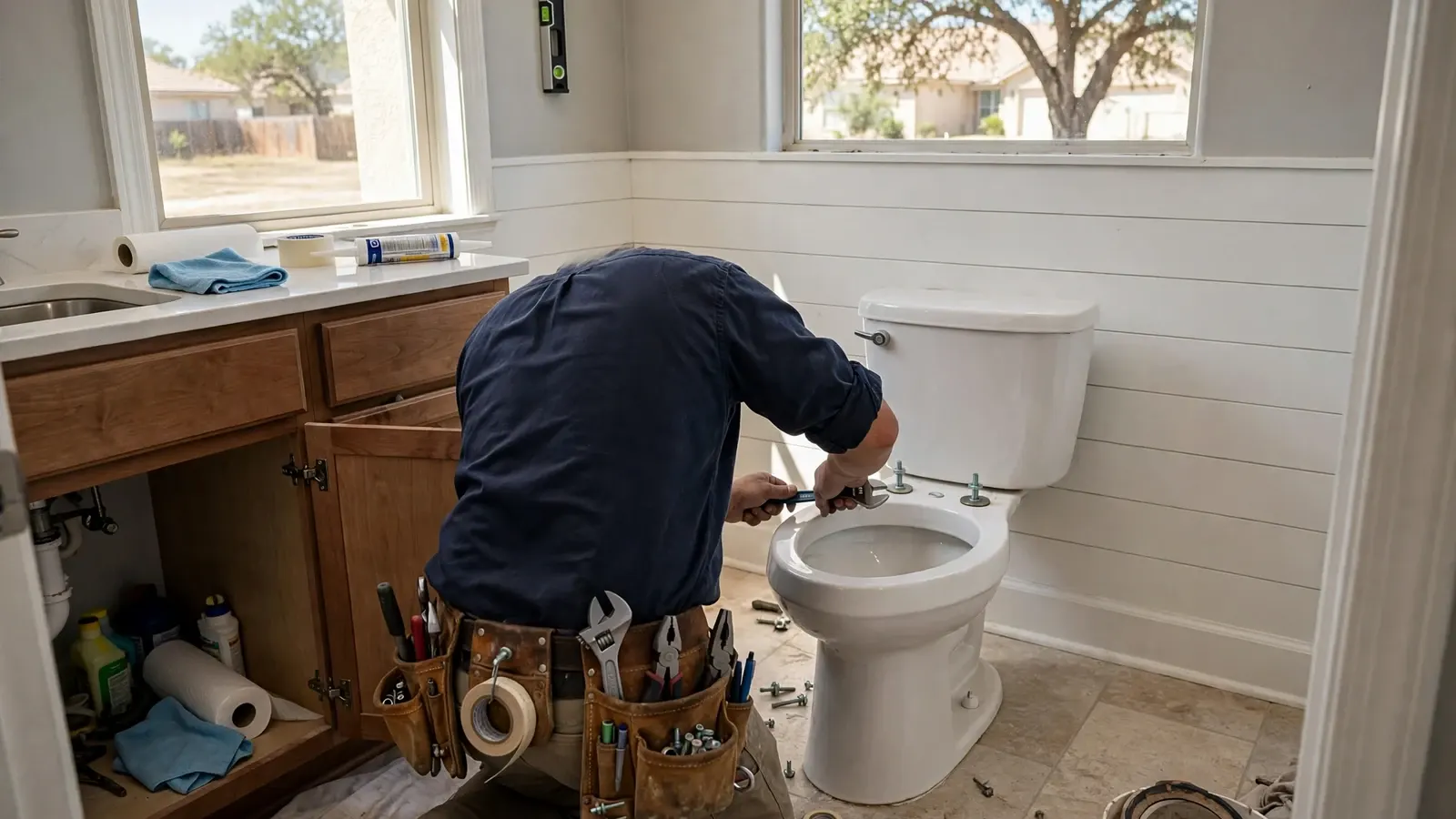
A toilet flapper is the rubber seal at the bottom of the tank. When it wears out, water leaks from the tank into the bowl, the toilet runs on its own or refills with no one touching it, and your water use climbs for no reason. Replacing a flapper is one of the easiest plumbing repairs in a home, and it needs no special tools.
The steps are simple. Turn off the water, drain the tank, unhook the old flapper, clip in a matching one and set the chain length. The hard part is finding the right part and being sure the flapper is really the cause.
This guide covers the symptoms, a quick dye test, the repair and the other parts that can look like a bad flapper.
Signs The Flapper Is Leaking
The flapper lifts when you flush, lets the tank drain, then drops back to seal the opening so the tank can refill. Over time the rubber hardens, warps or collects mineral film, and it no longer seals. Water then trickles past it all day.
The most common sign is the toilet that refills now and then without being used, sometimes called a phantom flush. Another is a hissing or running sound that stops when you jiggle the handle.
- The toilet runs for a minute after flushing, or never fully stops.
- The tank refills by itself every so often with no one in the bathroom.
- You hear a faint hiss or trickle at night.
- The flapper looks warped, sticky, cracked or slimy to the touch.
- The water level in the tank sits lower than usual between flushes.
A Two Minute Dye Test
Drop a few drops of food coloring into the tank, then do not flush. Wait about fifteen minutes. If color shows up in the bowl, water is leaking past the flapper. This test tells you more than guessing.
Flush afterward to clear the color. If the bowl stays clear, the running sound comes from somewhere else, and the section on other causes below applies.
Choosing The Right Replacement Flapper
Flappers are not one size. Many toilets use a two inch flapper, many newer ones use a three inch flapper and some brands use a special shape. The best match is the brand and model printed inside the tank or on the back of the bowl.
If you cannot find a model, take the old flapper to the store and match its size, its attachment style and its chain. Adjustable flappers exist, but they work best on toilets whose standard part is hard to find.
| Flapper style | Where you see it | Matching tip |
|---|---|---|
| Two inch round | Older toilets | Measure the opening in the tank bottom. |
| Three inch round | Many newer, high-flow flush designs. | The opening is visibly larger. |
| Pivot ears on a frame. | Most common attachment | Match the ear spacing to the overflow tube. |
| Ring that slips over the tube. | Some brands | Match the ring diameter to the overflow tube. |
How To Replace The Flapper
Close the shutoff valve at the wall behind the toilet by turning it clockwise. Flush to empty the tank. A little water will remain, so keep a towel handy.
Unhook the chain from the flush lever and slip the old flapper off the pivot ears or the ring. Clip the new flapper in the same position, with its seal sitting squarely over the opening. Attach the chain to the lever.
The chain length matters. Leave a small amount of slack, about enough that the flapper sits flat when the lever rests. A chain pulled tight holds the flapper off the seat, and a chain far too long can tangle under the flapper and block the seal.
Open the shutoff, let the tank fill and flush a few times. Watch the seal close cleanly. Repeat the dye test if you want to be certain.
Parts And Tools To Have Ready
- A new flapper matched to the make, model or opening size of your toilet.
- A towel and a small bucket for the water left in the tank.
- A soft cloth and a little white vinegar for the seat.
- Food coloring for the before and after dye test.
- A flashlight, because tanks are often dark and cramped.
Why A New Flapper Sometimes Fails Early
A flapper that is the wrong size seals poorly from the first day. So does one hooked to a chain that is too short, because the chain holds it slightly open. A seat with mineral crust or a rough spot will wear the new rubber quickly.
If you replaced a flapper and the toilet still runs, do the dye test again before buying more parts. If you want help sorting it out, call (973) 488-5410 and describe what you see.
When It Is Not The Flapper
A new flapper that still leaks often points to the seat. Mineral buildup or a nick on the rim of the flush valve opening keeps the seal from closing. Wipe the seat with a cloth and a little vinegar, then try again.
If water is running over the top of the overflow tube, the fill valve is not shutting off, and the float needs adjusting or the valve needs replacing. Ball cock and fill valve replacement is part of the state's ordinary maintenance list, which we explain in the local section below. If the toilet rocks, leaks at the base or clogs, those are different repairs, and our toilet repair team can handle them.
When To Call A Plumber
A flapper is a good DIY job. Call a plumber if the shutoff valve will not close, if it drips after you turn it, or if you see water around the supply connection. Forcing an old valve can turn a small drip into a leak that floods a floor.
Call if more than one toilet in a building runs, if water bills rise with no explanation or if you suspect a hidden leak. Our leak detection service finds leaks that a flapper cannot explain. If you rent, report a running toilet to the landlord instead of buying parts yourself.
What This Means In East Orange
The city describes East Orange water as very hard. Minerals form a film on rubber, and a flapper that is coated may stop sealing before the rubber itself fails. If your flapper looks coated, rubbing the seat clean and replacing the flapper is a better fix than any additive.
The East Orange Water Commission draws its supply from 18 wells in the Passaic aquifer, and the city's report says the water is disinfected with chlorine. If you have questions about your water account or an unexplained increase in use, the Water Commission is at 99 S Grove Street and 973-266-8869.
New Jersey's ordinary maintenance rule (N.J.A.C. 5:23-2.7) lists replacing ball cocks and clearing stoppages among work that does not need a permit. Because the rule is not all-inclusive, confirm anything beyond a flapper or fill valve with the East Orange Building Division at 973-266-5320. About 69 percent of occupied homes in the city are renter occupied, according to the city's draft housing element, so many repairs will be a landlord's job.
Keeping The New Flapper Working
Skip the blue tablets that sit in the tank. They can attack rubber and shorten the life of a new flapper. Check the toilet with a dye test once a year, or any time the water bill jumps.
If the toilet is very old, a new flapper may be the first of several worn parts. We help property owners in Bloomfield and Orange as well as in the city, and the number to call is (973) 488-5410. We can replace the full internal kit if that makes more sense.