
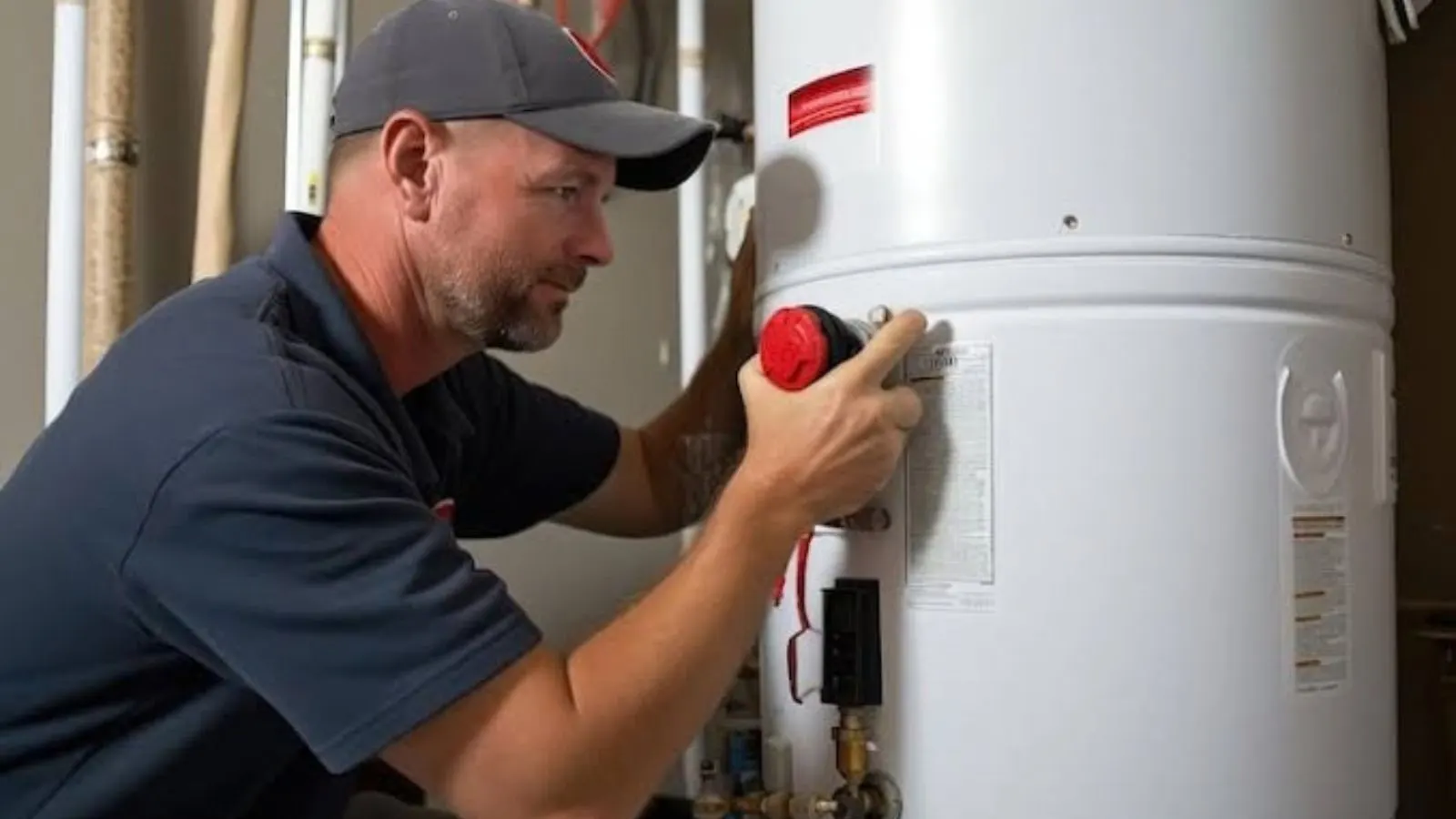
Tankless water heaters generally last longer and avoid the standby heat loss of a tank, but they cost more to install and have a flow limit. Tank water heaters are cheaper and simpler to put in, but they waste some heat keeping stored water hot and have a limited supply once the tank empties. The better choice depends on your building, your gas and vent setup and how many people use hot water at once.
This is a comparison, not a verdict. A single person in an apartment and a family of five in a two-family house have different needs. Below we explain lifespan, efficiency, space, venting, flow limits and the way very hard water affects both types.
We do not quote prices here. Our companion cost guide covers installation factors, and for a quote on your own home, call (973) 488-5410.
Side By Side: Tank Versus Tankless
| Factor | Tank water heater | Tankless water heater |
|---|---|---|
| Hot water supply | Limited to the stored volume, then recovery time. | Continuous, limited by flow rate and temperature rise. |
| Energy use | Standby loss as stored water is kept hot. | No stored water, so less standby loss. |
| Typical lifespan | Shorter, and strongly affected by tank corrosion. | Generally longer when maintained, check the warranty. |
| Space | Needs floor space for a large cylinder. | Wall-mounted and compact |
| Gas and vent | Often reuses an existing flue. | May need a larger gas line and special venting. |
| Hard water | Scale collects at the bottom of the tank. | Scale builds on the heat exchanger and needs flushing. |
| Install work | Simpler and quicker | More piping, gas and vent changes. |
The table gives general behavior, not promises. Specific models differ, so read the warranty and the manual for the unit you are considering.
Lifespan And What Shortens It
Tankless units are generally reported to outlast tanks because there is no large steel vessel sitting full of water and slowly corroding. But a tankless unit that is never flushed in hard water can fail early at the heat exchanger. A tank that is flushed and has a working anode rod can last well past a neglected tankless unit.
Warranty terms are a useful clue, but they are not the same as lifespan. Compare what is covered, for how long, and whether the warranty requires annual service.
Efficiency Without The Hype
A tank heats water around the clock to keep a reserve ready, so heat leaks through the tank walls even when nobody uses hot water. A tankless unit heats only when you open a tap. That is the source of its efficiency advantage, and it matters most in homes with modest hot water use.
In a busy household, the gap narrows because the tank is being drawn down all day. We do not cite a percentage here, because it varies by model and use. If efficiency is your goal, look at the manufacturer's rating and ask us how it applies to your house.
Gas, Venting And The Space You Have
Gas is where tankless projects get complicated. A tankless unit burns a lot of gas quickly, so the gas line often has to be larger than what a tank used. The vent is also different, because high-efficiency units may need plastic pipe through a wall instead of a metal flue to a chimney.
Our tankless water heater page covers these upgrades. If you are replacing a tank with a tank, our water heater replacement page explains the simpler path. Space is the other side of the coin. A wall-mounted tankless unit frees floor area, which helps in tight basements and closets.
Flow Rate Limits And Winter Water
Every tankless heater has a maximum flow rate at a given temperature rise. If two showers and a dishwasher run together, a unit that is too small will deliver lukewarm water. The colder the incoming water, the bigger the temperature rise the unit must produce, so the limit is tighter in winter.
Sizing a tankless unit starts with counting fixtures that run at the same time. If a household often runs several at once, a larger unit, two units or a tank may suit it better. We would rather size it right than sell the most expensive option.
What This Means In East Orange
The city of East Orange describes its water as very hard. Its own softening page notes scale buildup in water heaters. Scale forms on tank bottoms and on tankless heat exchangers, so a flushing plan matters for both types. Ask any installer how often and how.
The city's draft housing element, dated July 8, 2025, reports that about 69 percent of occupied homes are renter occupied and that 38.1 percent of units are in buildings with 20 or more units. In many of those buildings the owner chooses the water heater or a central system, so a tenant usually cannot swap types. Small owner-occupied houses and two-family homes are where the tank-versus-tankless choice is most often yours.
On incentives, the federal section 25C credit ended for property placed in service after December 31, 2025, according to the IRS. PSE&G lists appliance rebates, but its pages did not state whether funds are open, so call 1-855-846-2895 before you buy. A permit is normally required for replacement. Confirm with the East Orange Building Division at 973-266-5320.
Apartments Versus Houses
In a house, you control the heater, so the question is the budget and the hot water demand. A tankless unit makes sense where space is tight and use is steady. A tank makes sense where the budget is tight or the gas and vent changes would be extensive.
In an apartment building, a central boiler or a large commercial heater may serve every unit, and the choice belongs to the owner. Our commercial plumbing page explains how we work with multi-unit properties. If you rent, ask your landlord about hot water, because the state tenant bulletin says hot water should be kept between 120 F and 160 F.
Maintenance You Will Actually Do
A heater is only as good as its upkeep. Choose the type you will maintain, because a neglected unit of either kind fails early.
- Tank: drain a few gallons from the bottom drain once a year to move sediment, and test the relief valve.
- Tank: ask your installer when the anode rod should be checked.
- Tankless: flush the heat exchanger on the schedule in the manual, and more often in very hard water.
- Tankless: keep the air intake and vent clear, and clean the inlet water screen.
- Both: know where the water shutoff is, and replace a leaking relief valve discharge promptly.
DIY Versus Calling A Pro
Flushing a tank and checking the relief valve are reasonable homeowner tasks if you are comfortable and the water is turned off and cool. Installing, converting fuel or changing a vent is not. Gas and combustion work in New Jersey must be done by a licensed plumber, and an error can cause a gas leak or carbon monoxide.
If you smell gas, leave the building and go at least 350 feet away before you call PSE&G at 1-800-880-7734 or 911. Do not flip a switch or start a car on the way out.
Which Should You Pick? A Short Decision Guide
- Pick a tank if the budget is tight, the demand is moderate, and the current flue and gas line are in good shape.
- Pick tankless if space is tight, hot water use is steady, and the gas and vent can be upgraded without a huge job.
- Ask about both if your household runs several fixtures at once, because sizing is the hard part.
- Ask first if your building is multifamily, because the owner may already have a central system.
Water Heater Help Near East Orange
We also work in Irvington and Bloomfield, where many houses and two-family buildings face the same tank-or-tankless decision. For a straight recommendation based on your home, call (973) 488-5410 and we will go through the numbers with you.