
Sewer pipe lining, also called cured-in-place pipe, repairs a damaged sewer line from the inside by pulling a resin-soaked liner through the old pipe and curing it into a new pipe within the old one. It avoids digging a long trench, but it only works when the old pipe is structurally able to carry the liner. A collapsed, badly offset or heavily sagging pipe usually needs a different repair.
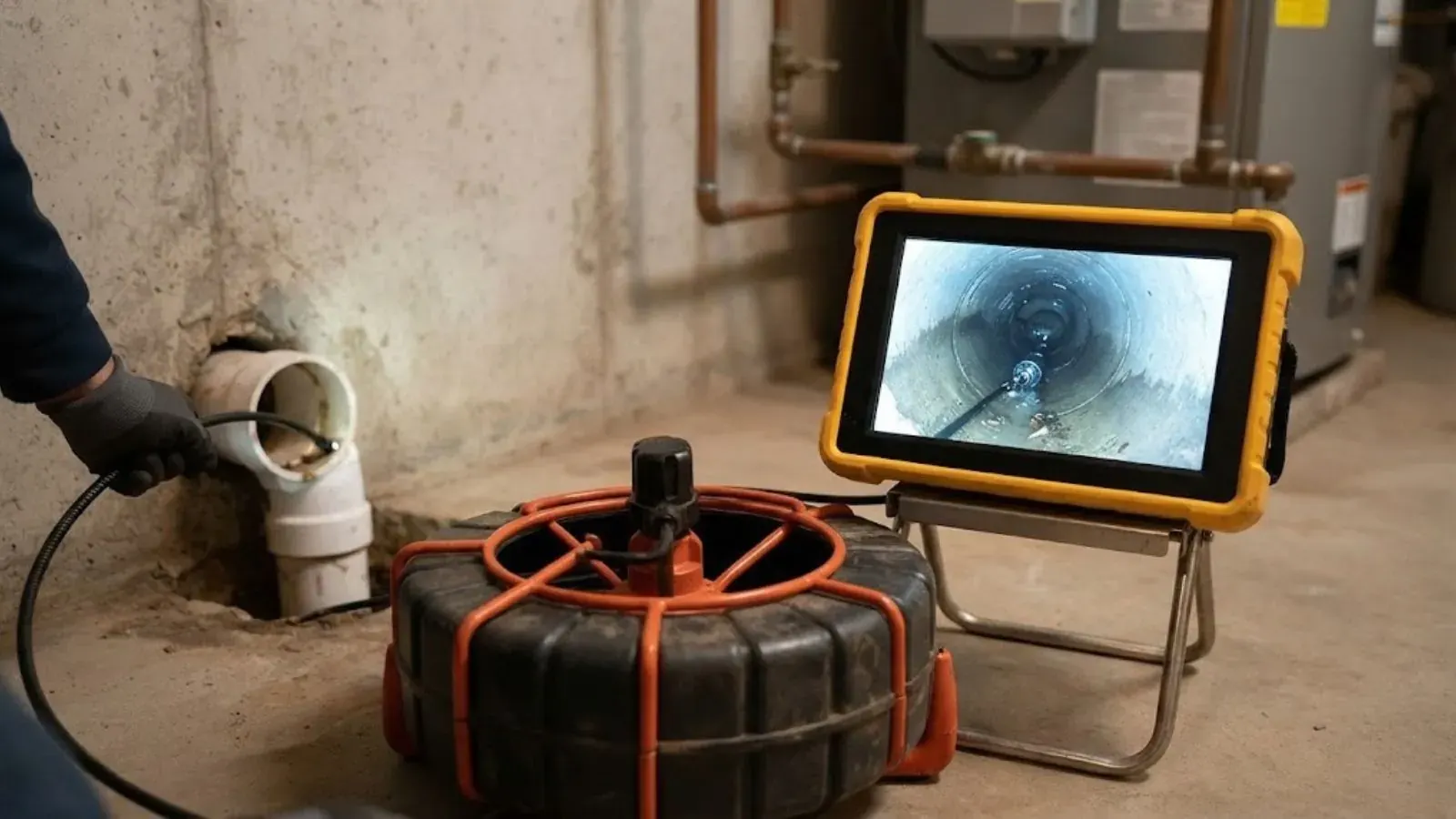
Lining starts with a camera inspection, because you cannot decide on a repair until you see the pipe. Below we explain the process, who it suits, who is responsible for the lateral in East Orange, and the permit questions we could not verify.
We do not quote prices here, because they depend on length, diameter, access and condition. For a look at your line, call (973) 488-5410.
How Pipe Lining Works, Step By Step
- Camera inspection: a camera records the pipe, so the crew can see cracks, roots, offsets and collapses and measure the length.
- Cleaning: roots, grease and scale are removed with a cutter or by hydro jetting, so the liner can bond to a clean surface.
- Liner preparation: a felt or fiberglass liner is soaked in resin and sized to fit the pipe.
- Installation: the liner is pulled or inverted into the old pipe through an access point such as a clean-out.
- Curing: heat, steam or ultraviolet light hardens the resin so the liner becomes a rigid pipe.
- Reinstating connections: any branch lines that were covered are opened from the inside.
- Final inspection: a second camera run confirms the liner is smooth and sealed.
Each step affects the schedule and the result. Skipping cleaning or inspection is the most common reason a liner fails.
Which Pipes Suit Lining
Lining suits a pipe that is cracked, leaking at joints or invaded by roots, but is still roughly round and aligned. It works in cast iron, clay, concrete and some other materials. It is often chosen where digging would mean tearing up a driveway, a porch or a front yard.
It does not fix a pipe that has collapsed, has a large offset where sections have shifted, or has a deep sag called a belly where water sits. A liner follows the old pipe's shape, so it cannot correct a bad slope. In those cases, sewer line repair by digging and replacing is the honest answer.
Lining Versus Dig And Replace
| Factor | Pipe lining | Dig and replace |
|---|---|---|
| Surface disruption | Small access points, little digging. | Open trench through yard, drive or floor. |
| Best for | Cracks, joint leaks, root intrusion in sound alignment. | Collapses, large offsets, bellies and missing sections. |
| Corrects slope | No, it follows the old pipe. | Yes, a new pipe can be laid to proper slope. |
| Pipe diameter | Slightly reduced by the liner thickness. | Can be the same size or larger. |
| Preparation | Needs a thorough cleaning and inspection first. | Needs excavation, shoring and utility locating. |
| Permit and inspection | Permit questions apply, confirm with the city. | Permit questions apply, plus street work if needed. |
Camera Inspection Comes First
We never recommend lining without a recent camera inspection. A camera shows whether the pipe is a candidate and where the trouble sits. It also helps with a property sale, an insurance review or a conversation with the Water Commission.
Our sewer inspection page explains what we look for, and we share what the camera saw so you can decide with the same information we have.
What This Means In East Orange
The East Orange Board of Water Commissioners collects sanitary sewage and sends it to the Passaic Valley Sewerage Commission and to the Joint Meeting of Union and Essex. According to the commission's own program documents, the owner is responsible for the sewer lateral from the home to the point of connection with the commission's main. The part in the street belongs to the commission.
Commission minutes from May 21, 2024 record the Director saying the city's sanitary sewer is separate from storm drainage, but it discharges into a combined sewer carried by Newark. The board ordered an inflow and infiltration study for flooding. A lined lateral reduces groundwater leaking into your own pipe, but it does not change what happens in the public system downstream.
Who pulls the permit for lining a lateral is not something we could verify. Sewer lateral work involves sewer and drainage piping, which is not ordinary maintenance under N.J.A.C. 5:23-2.7. Confirm the process with the East Orange Water Department at 973-266-8869 and the Building Division at 973-266-5320 before you sign a contract. Also, call 811 before any digging.
Older Housing And Why Lining Comes Up Here
The city's draft housing element, dated July 8, 2025, reports that 29.8 percent of occupied homes were built in 1939 or earlier, and the median home dates to 1957. Older laterals are often clay or cast iron, and joints in those materials leak or admit roots over decades.
Dense blocks also limit access. A trench across a narrow lot or under a front step can be expensive and disruptive. That is why lining is considered here, though only when the camera shows the pipe can take it.
What To Expect During And After The Job
Plan for water to be off at the affected fixtures while the liner cures, and for the building's drains to be unusable for that period. Your contractor should tell you how long and when you can use water again. In a multifamily building, notify every unit in advance so nobody floods a floor by running a washer.
After curing, the crew runs the camera again and reinstates the branch connections. Keep that video with your records. If you later sell the building or file an insurance claim, a clear before and after record shows what was done and what condition the pipe was in.
Questions To Ask Any Lining Contractor
- Can I see the camera video of my line before and after?
- What is the liner material and the length and diameter being lined?
- Who is pulling the permit, and what is their plumbing license number?
- What happens if the camera shows a collapse or a belly during the job?
- What is the warranty on the liner, and what does it cover?
What Affects The Price Of Lining
We list factors, not figures. The following move the price of a lining job.
DIY Versus Calling A Pro: Honest Limits
Pipe lining is not a do-it-yourself project. It needs specialized equipment, resin handling and a curing process that cannot be rushed. A poorly installed liner can wrinkle, fail to bond or block the pipe.
Owners can help by marking the clean-out, clearing access and keeping a record of backups. Do not pour chemicals into the line, because they can interfere with the resin bond and are a hazard to anyone opening the pipe. If sewage is backing into your home, stop using water, keep children and pets away, and call (973) 488-5410.
Sewer Lining Questions Near East Orange
We also assess laterals in West Orange and Irvington, where older lines raise the same lining question. Before any lining work, call (973) 488-5410 to arrange a camera inspection, so the decision rests on what the pipe actually looks like.