
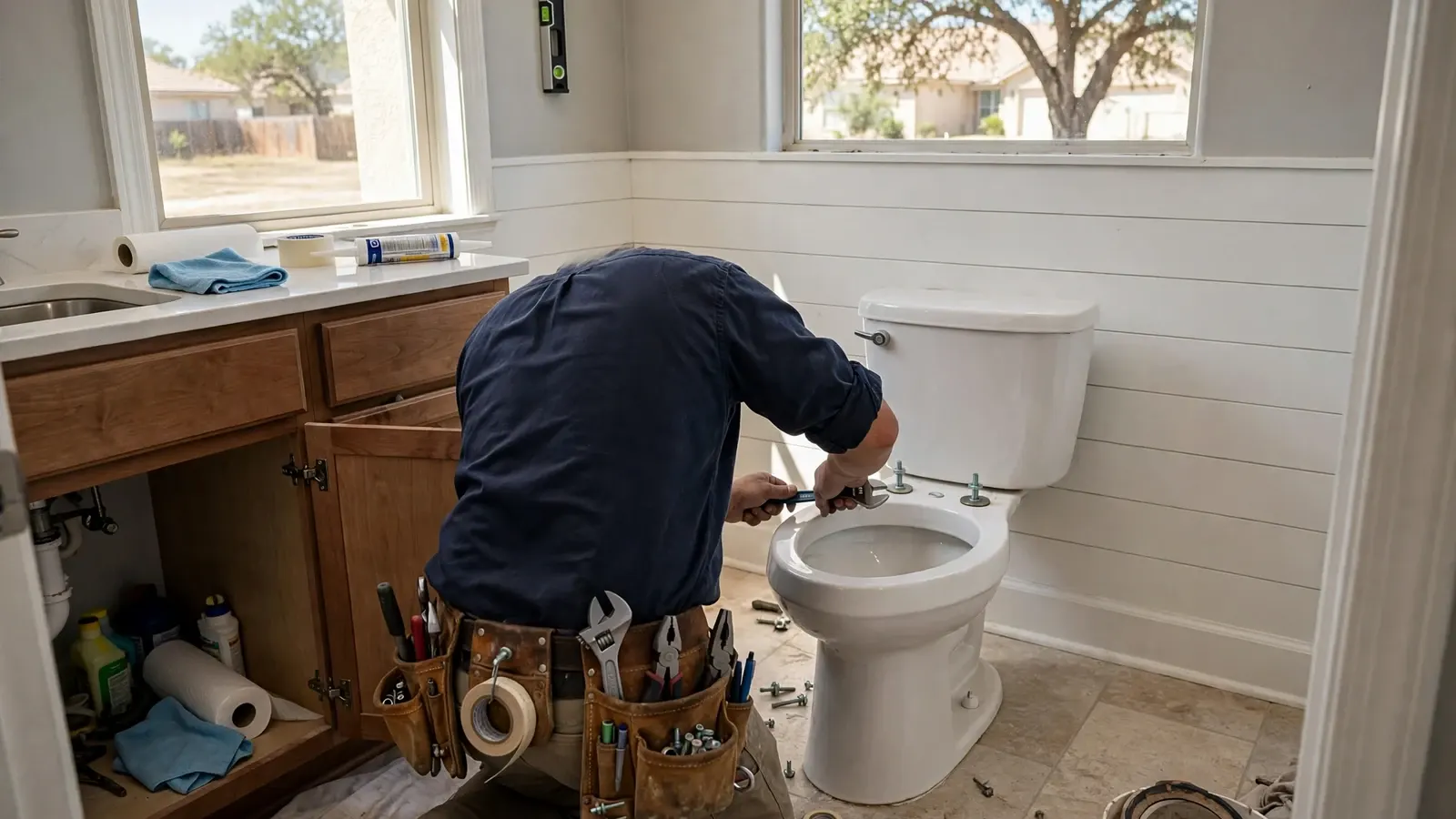
For a clogged toilet, use a toilet auger, also called a closet auger, rather than a general drain snake. A toilet auger has a curved guide and a protective sleeve that lets it pass through the bowl's trap without scratching the porcelain. A long drain snake can damage a bowl, so we recommend it only for pipes beyond the toilet and only in the right hands.
In this article we explain the difference between the two tools, whether a snake can damage a toilet, a safe step-by-step method, and the signs that tell you to stop. Most single-toilet clogs clear with a plunger or an auger in a few minutes. A clog that comes back, or one that affects the whole line, is a different problem.
Keep gloves, old towels and a bucket nearby before you begin. Water in a clogged toilet bowl may contain waste, so treat it carefully.
Toilet Auger Versus Drain Snake
The two tools look alike but do different jobs. Picking the wrong one is the most common mistake.
| Tool | Built for | Risk to the bowl |
|---|---|---|
| Toilet auger (closet auger). | The bend inside the toilet itself. | Low when used with the sleeve against the porcelain. |
| Hand drain snake | Sink, tub and shower lines. | Higher, because bare coil can scratch or chip porcelain. |
| Motorized cable machine | Main lines and larger pipes. | Not for use through a toilet bowl without pulling it. |
A toilet auger is short, about three to six feet, with a hand crank and a rubber or vinyl sleeve over the shaft. The sleeve sits against the bowl and the tip slips into the trap. A drain snake is longer and has a bare metal cable that grinds against porcelain.
Can A Snake Damage The Bowl?
Yes, it can. Bare metal dragged around the trap can leave scratches in the glaze, and a forced cable can crack porcelain or damage the wax ring seal if the toilet is moved. Scratches also give waste and scale a place to cling, so clogs return sooner.
The damage risk is why we use the right tool and a gentle touch. If an auger meets firm resistance, do not force it. Back out and reassess.
Step By Step: Using A Toilet Auger
Take your time. A clogged toilet is rarely an emergency if you stop flushing.
- Stop flushing. If the bowl is near full, remove some water with a cup and bucket.
- Put on rubber gloves and lay towels around the base.
- Pull the auger shaft back so the tip sits inside the sleeve, then place the sleeve in the bowl opening.
- Crank the handle clockwise while pushing gently. The tip should work into the trap and meet the clog.
- When you feel the clog give way, keep cranking a little, then pull the auger back slowly with the clog or the debris.
- Flush once to test. If the bowl drains and refills normally, run a second flush to be sure.
- Rinse the auger and wipe the bowl rim with a household disinfectant.
If you have a plunger, try it first. A flange plunger with a rubber flap suits a toilet better than a flat cup. Press to seat it, then push and pull gently without lifting off the drain. Many clogs break up in a dozen strokes.
When The Clog Is Not In The Toilet
A clog in the toilet's own trap is local. A clog in the line past the toilet is not. Several signs point to the second case, and an auger will not solve it.
If the tub gurgles or fills when you flush, if the sink drains slowly at the same time, or if a basement floor drain bubbles when the toilet runs, the blockage is in the branch or main. At that point we recommend drain cleaning with a proper cable machine, because a hand tool cannot reach.
Signs To Stop And Call
- The clog returns within days of clearing it.
- More than one fixture is slow, or the whole line gurgles.
- Water rises in the tub or shower when you flush.
- The auger hits a hard obstruction, such as a toy or a hard object, and will not move.
- The toilet rocks, leaks at the base or has water on the floor around it.
- You see sewage coming up through a floor drain or a basement drain.
Call (973) 488-5410 if any of these apply. We explain what we find, and we tell you honestly if the repair is a quick clear or something bigger.
What This Means In East Orange
The city's draft housing element, dated July 8, 2025, reports that about 69 percent of occupied homes are renter occupied and that 38.1 percent of units are in buildings with 20 or more units. In a building like that, a toilet that backs up may be part of a shared stack. If neighbors have the same problem, do not keep flushing, and tell the landlord in writing.
East Orange's sewer system collects sanitary sewage and sends it to larger systems. Commission minutes from May 21, 2024 record the Water Commission Director saying the city discharges sanitary sewer into a combined sewer carried by Newark. During heavy rain, combined sewers can be stressed, so an unusual backup during a storm may not be about your toilet at all.
The owner is responsible for the sewer lateral from the building to the connection with the Water Commission main, according to commission documents. Water Department at 99 S Grove Street, 973-266-8869. Clearing a stoppage is ordinary maintenance under the state construction code and does not need a permit by itself, but replacing drain piping does. Call the East Orange Building Division at 973-266-5320 if you are unsure.
DIY Versus Calling A Pro: Honest Limits
A toilet auger is a fair DIY tool. Most people can use one safely with gloves and a bit of patience. It is not the right tool for a clogged main line, a root problem or a collapsed pipe.
Never mix chemical drain openers with a snake. If a chemical product has been poured into the bowl, tell the plumber before anyone opens the toilet. The liquid can burn skin and eyes if it splashes. Also, never use a drain machine through a toilet bowl without the right guard and training, because the cable can whip and damage the fixture.
What Not To Flush After A Clog
Most toilet clogs come from what goes down, not from the pipe. Flushable wipes do not break up the way toilet paper does, and they are a leading cause of line clogs in multifamily buildings. Paper towels, feminine products, cotton pads and dental floss belong in the trash.
A little prevention helps a shared stack, because one household's habits affect everyone below. If you manage a building, a note to tenants is cheaper than a call at midnight.
Repeat Clogs And The Next Step
If a toilet keeps clogging, the toilet itself may be the cause. Low-flow models from some eras flush weakly, and a partial flange or bowl blockage can slow the flush. Our toilet repair team looks at the flange, the trap and the flush valve to see whether the fixture is at fault.
If the toilet is sound and the problem persists, a camera inspection shows the line behind it. It finds sags, roots and breaks that a snake cannot see.
Toilet Help Near East Orange
We also respond in Orange and West Orange. Call 973-488-5410 any hour and tell us what the water is doing.