
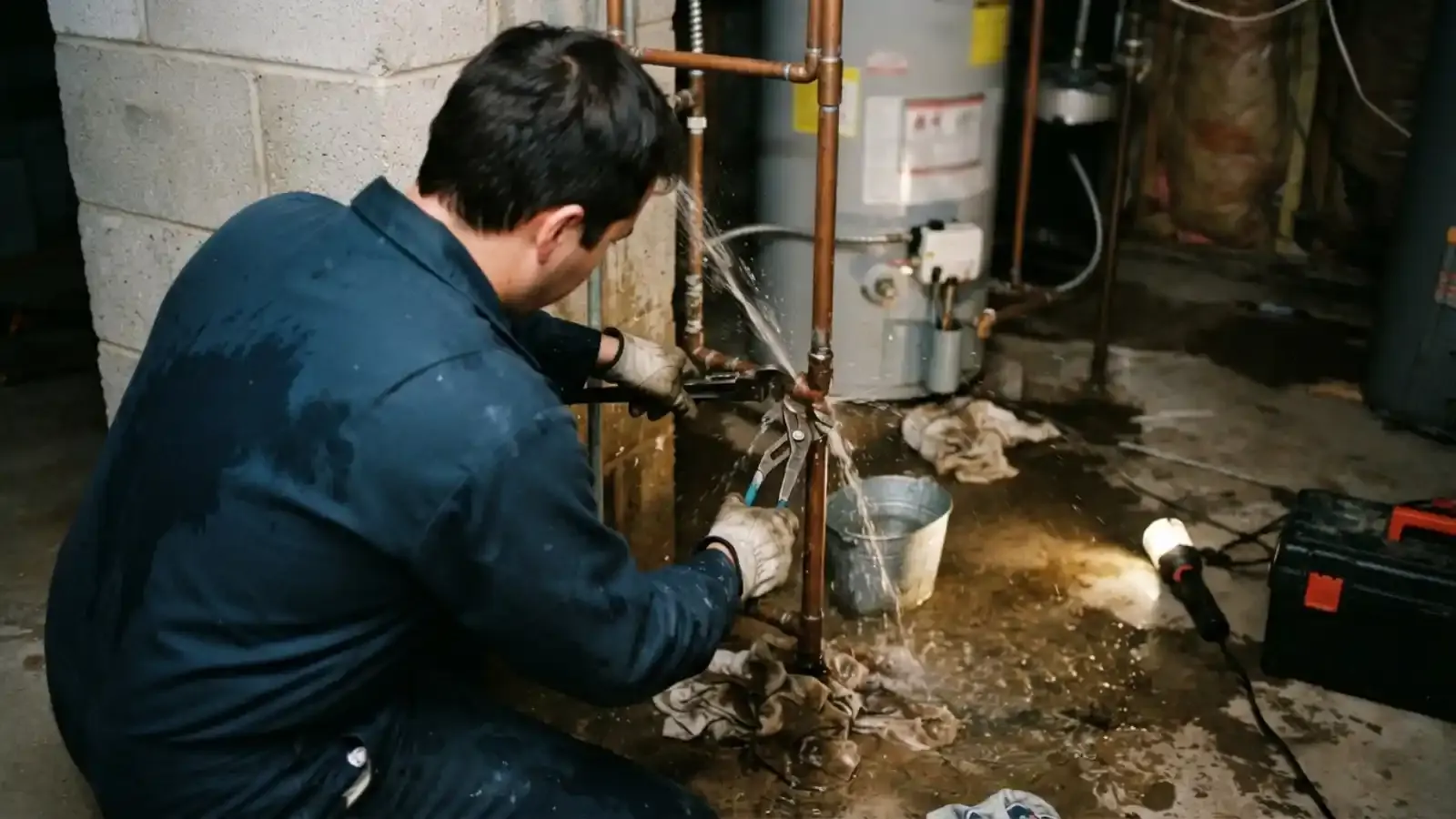
Plumbing repair costs vary because no two jobs are the same. The price of a repair depends on what is broken, where it sits, when you call and what the code requires. A fair quote explains those factors, and this guide lists them so you know what to ask.
We do not print dollar amounts here, because a number without the job in front of us would mislead you. We give a clear price before work starts, after we have seen the problem.
The factors below apply across most jobs, from a leaking faucet to a new water heater. Understanding them makes a quote easier to compare.
Job Type And Scope
A small repair, such as replacing a washer or clearing a sink trap, takes little time and few parts. A replacement, such as a new water heater or a section of drain pipe, involves removal, new materials, connections and often a permit. A larger project, such as repiping, involves many fixtures and wall access.
Scope also grows after the first look. A plumber who opens a wall may find corroded pipe beyond the leak. Ask what happens to the price if the scope changes, and ask for the answer in writing.
Access To The Problem
A pipe in an open basement ceiling is easy to reach. A pipe behind tile, inside a finished wall or under a concrete slab takes more time to expose and to restore afterward. Tight spaces and crawl spaces slow the work as well.
Access includes the building. Upper floors of a large apartment building, coordination with the superintendent and limited shutoff windows all add time to a repair.
Emergency Or After-Hours Calls
Nights, weekends and holidays carry after-hours rates, because a crew is staffed and equipped for them. A burst pipe at 2 a.m. costs more to answer than the same visit on a weekday morning. The price should still be stated before work begins.
If the problem can be contained, closing a shutoff valve and waiting for daytime hours may be an option. A technician can tell you by phone whether it can wait, and you can reach the crew at (973) 488-5410.
Pipe Material And Condition
Copper, PVC, galvanized steel, cast iron and older lead lines each need different tools and joining methods. Corroded galvanized pipe may not hold a new fitting, and cast iron is heavy and slow to cut. A repair on an old pipe can reveal more problems nearby.
A camera inspection or a pressure test can show the condition before a bigger decision. Our leak detection team finds hidden leaks without opening more of the wall than needed.
Permits, Parts And Fixtures
Some work needs a permit and an inspection. The state treats ordinary maintenance, such as replacing a faucet or clearing a stoppage, as work that does not need a permit. Replacing or relocating piping does, and the permit adds time and a fee.
Parts range from basic to premium. A builder-grade faucet and a designer faucet can be the same job at very different totals. Ask what brand and model the quote assumes, and whether you will supply the fixture.
Multifamily Coordination
In a building with many apartments, a repair often touches more than one unit. The plumber coordinates access with tenants, shuts off shared risers and sometimes returns for a second visit. That coordination takes time.
Our drain cleaning crew sees this often with shared stacks, where one blockage affects several apartments. A written report of cause and work done helps landlords and insurers.
Which Factors Dominate Which Jobs
| Common job | Factors that usually dominate | Factors that matter less |
|---|---|---|
| Clearing a clogged drain. | Where the blockage sits, access to a cleanout, time of day. | Permit |
| Faucet or toilet repair. | Parts and fixtures, how old the fixture is. | Access, permit |
| Leak repair | Access to the pipe, pipe material, whether a wall must be opened. | Time of day, if contained. |
| Water heater replacement | Tank or tankless, venting, gas line, permit, removal. | Access, if the heater is in a basement. |
| Burst pipe | After-hours timing, access, water damage risk. | Fixture choice |
| Sewer or water line repair. | Depth, pipe material, excavation, permit and utility coordination. | Parts |
| Repiping | Number of fixtures, wall access, pipe material, restoration. | Emergency timing |
Keeping Costs Down Without Cutting Corners
Know where your main water shutoff and your fixture shutoff valves are, and test them once a year. A valve that closes lets you stop a leak before it spreads, which keeps a small job small. Tell everyone in the building where the main shutoff is.
Act on small signs. A drip, a slow drain or a stain on a ceiling is cheaper to fix early than after damage. If you manage a building, ask about scheduled maintenance on main drains and water heaters, and call (973) 488-5410 to set it up.
Keep records of past repairs. A plumber who sees what was done before can diagnose faster, and that saves time on site.
What To Ask For In A Quote
- What exactly will you do, and what is not included?
- What happens to the price if you find a second problem?
- Is the permit included, and who files it?
- Which brand and model of part or fixture are you using?
- Are after-hours rates in the price, and how are they stated?
- How long will the work take, and will the water be off?
Compare quotes by scope, not by the bottom line alone. A low number that leaves out the permit, restoration or removal can end up costing more. If a quote is vague, ask for details before you agree. For major projects such as water heater replacement or burst pipe repair, we explain each line before work starts.
Why Two Quotes Can Differ
Two plumbers can quote the same problem at different totals for good reasons. One may include the permit, removal of the old part and restoration of the wall, while another leaves them out. One may plan to replace the failed section and the other the whole run.
Ask each plumber to explain the scope in plain words, and compare line by line. The quote that explains what could change and why is usually the one that will hold.
What This Means In East Orange
The city's draft housing element says 29.8 percent of occupied homes in East Orange were built in 1939 or earlier, and the median home dates to 1957. Older buildings often have older pipe, and older pipe tends to widen the scope of a repair. About 38.1 percent of units sit in buildings with 20 or more units, which adds coordination to many jobs.
Responsibility affects cost too. The city's water FAQ says the line from the street to the curb box is the Water Commission's responsibility, and the owner is responsible beyond it. Owners are also responsible for the sewer lateral from the home to the Water Commission main. Call the Water Department at 973-266-8869 if you are unsure where the line divides.
For permit questions, call the East Orange Building Division at 973-266-5320. We also serve Orange and Irvington and give the same clear price before work starts at every address.
Code And Standards Reference
Whether a repair needs a permit is set by N.J.A.C. 5:23-2.7, which lists what counts as ordinary maintenance. Permit fees and inspection time are separate line items on any job that needs one, and the plumbing subcode (N.J.A.C. 5:23-3.15) sets the standard the work is inspected against.