
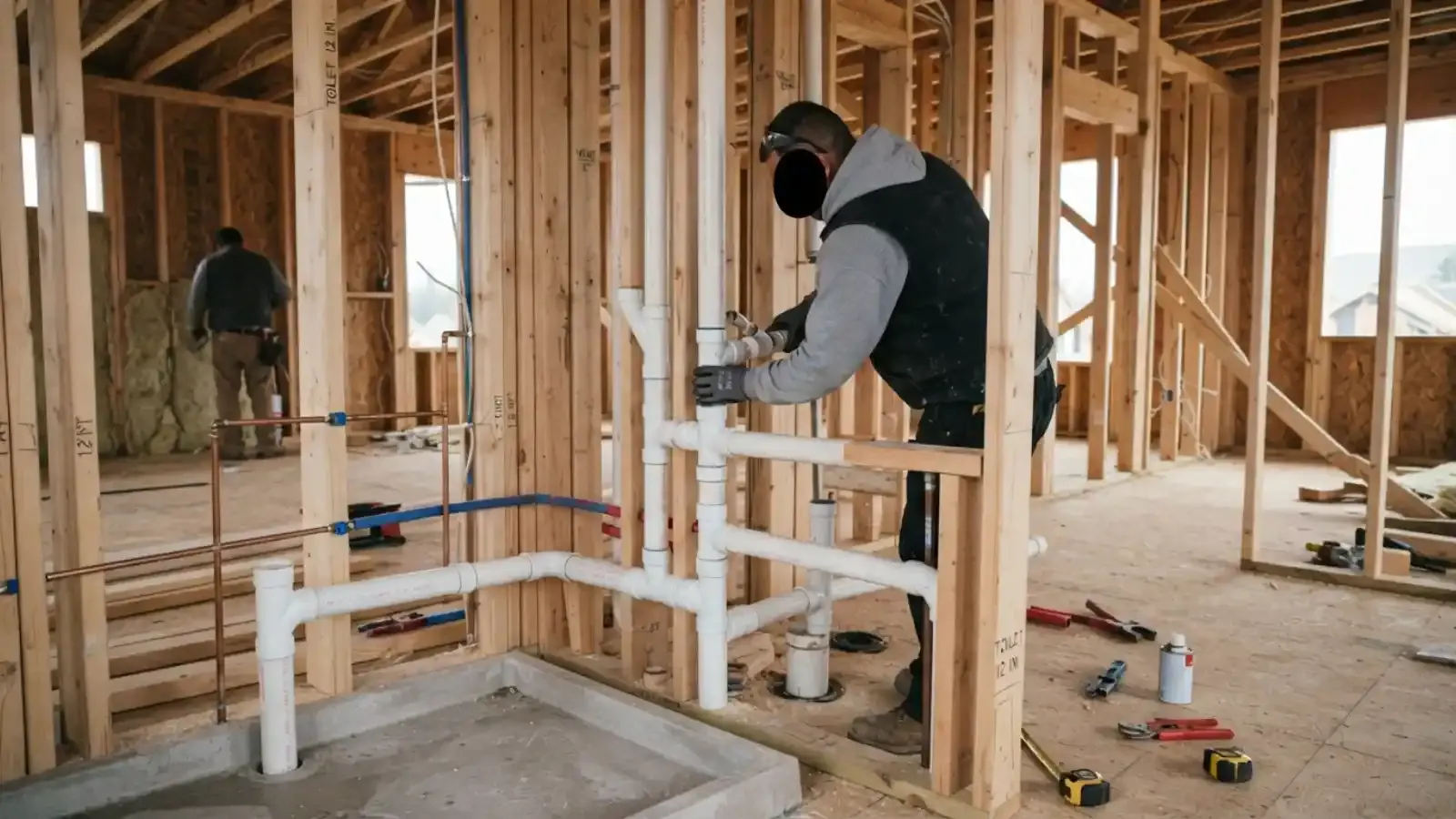
A basement bathroom is possible in many homes, but the drain is the hard part. A basement fixture often sits below the building's sewer line, and water does not run uphill. If your basement floor is below the sewer, you need a sewage ejector pump. If it is above, gravity may do the job.
The first step is to measure. Find where the main sewer line leaves the house and compare its depth to the basement slab. That one measurement decides most of the plan, the cost and the permit path.
New Jersey law requires licensed plumbing work for this kind of project, with a limited homeowner exception we explain below. Confirm the permit steps with the East Orange Building Division at 973-266-5320 before you cut a slab.
Gravity Drain Or Sewage Ejector Pump?
Gravity drainage is the simplest system. Wastewater runs downhill to the sewer line through a drain that slopes. It needs no pump and has no motor to fail.
A sewage ejector pump collects waste from the basement fixtures in a sealed basin and pumps it up to the building drain. It is the standard solution when the fixtures are lower than the sewer line. An ejector is not the same as a sump pump, which only moves groundwater.
| Option | When it fits | Main trade-off |
|---|---|---|
| Gravity drain | Basement drain is above the sewer line with enough slope. | Simplest system, but slope and depth set the limits. |
| Sewage ejector pump | Fixtures sit below the sewer line. | Needs a sealed basin, a vent, an alarm and power, and it can fail. |
| Up-flush toilet unit | Small additions with limited slab work. | Machines that sit behind the toilet, and they need the manufacturer's venting rules. |
Venting And Fixture Layout
Every basement fixture needs a vent, and a sealed ejector basin needs one too. The vent lets air move so the traps keep their water and the pump can discharge. A plumber connects it to an existing vent line or runs a new one through the building.
Layout matters. Keep the toilet, sink and shower close together so the drain runs are short. Long runs mean more slab cutting and more places to leak.
Water Supply, Hot Water And Access
Supply lines for the new bathroom branch off existing lines. A basement bathroom needs hot water, so the distance from the water heater is worth checking. Long runs mean slow hot water unless a recirculating line is used.
Also plan access. Basin lids and cleanouts must stay reachable, and a closed-in pump is a problem the first time it fails. Our plumbing installation team plans rough-in work with access in mind.
Backwater Valve: Protection From Sewer Backup
A backwater valve is a check valve in the building drain that closes when the sewer backs up. It stops sewage from rising through basement drains and fixtures in heavy rain. It needs access for cleaning, and it protects only the lines downstream of it.
If you are adding a basement bathroom, ask the plumber whether a backwater valve belongs on the plan. A sewer inspection with a camera shows the condition of the lateral and where a valve could sit.
Rain, Floods And The Basement Question
Basements in this region flood in storms. The city's 2018 master plan notes that Superstorm Sandy in 2012 brought basement flooding throughout the city. Hurricane Ida in 2021 delivered more than 3 inches of rain in one hour in nearby Newark, a record for that city.
A bathroom below grade must survive that kind of water. Plan for a working sump pump, a battery backup and a way to keep groundwater out of the sanitary system. Whether groundwater may be discharged to the sanitary sewer in East Orange is not something we can confirm, so ask the Building Division and the Water Department at 973-266-8869. Our basement waterproofing page explains how we keep water out in the first place.
Permits And Who Can Do The Work
State law says plumbing work may only be performed by a master plumber or an authorized plumbing contractor. The permit application lists the plumber's license number and is signed by the licensee. The construction code allows a single-family homeowner to do plumbing on his or her own dwelling, but you should ask the Building Division what permits and inspections still apply.
Applications are submitted in person at City Hall, 44 City Hall Plaza, on the third floor. Because a new bathroom adds fixtures and drain piping, it is not ordinary maintenance. Expect a permit and inspections, and confirm the exact steps by phone.
Planning The Sequence Of Work
A typical project starts with layout and a measurement of the sewer depth. The slab is then cut for the new drain, the lines are set and tested, and the trench is backfilled and patched. Ask the Building Division when inspections must happen, because drains are normally inspected before they are covered.
Allow time for the slab to be patched and cured before flooring goes down. If the plan includes an ejector, set the pit, the lid and the vent first, then test the pump and the alarm before any finishes go in.
Moisture, Ventilation And Finishes
A basement bathroom adds steam to a space that may already be damp. Plan an exhaust fan that vents outside, and choose water-resistant finishes. Check the slab and walls for moisture before you build, because a bathroom hides leaks.
If you find damp walls or a musty smell, deal with the source first. Call (973) 488-5410 and we can inspect the basement before you commit to a layout.
Decision Checklist Before You Start
- Measure the basement slab and the depth of the sewer line at the house.
- Decide between gravity drain and a sewage ejector based on that measurement.
- Confirm permit steps with the East Orange Building Division at 973-266-5320.
- Hire a licensed master plumber or plan the single-family owner exception with the city.
- Ask about a backwater valve and a camera inspection of the lateral.
- Plan for power, an alarm and a battery backup on the ejector.
- Check moisture and drainage in the slab before finishing walls.
Power, Alarms And Maintenance For An Ejector
An ejector pump runs on electricity, so it needs its own circuit and, ideally, a battery backup. Ask an electrician about the circuit, because that work has its own license rules. Add a high-water alarm so you hear a problem before the basin overflows.
Plan to test the pump twice a year by running water into the basin and watching it empty. If the basin smells or the pump runs constantly, call (973) 488-5410 to look at the float, the check valve and the vent.
What This Means In East Orange
The East Orange Water Commission described the city's sanitary sewer in 2024 minutes as separate from storm drainage, and said it discharges into a combined sewer carried by Newark. The board also ordered an inflow and infiltration study for flooding. Heavy rain can therefore stress the system a basement bathroom connects to.
Owners are responsible for the sewer lateral from the home to the point where it joins the Water Commission main. The part in the street belongs to the utility. If you plan work on the lateral, call 811 before digging, and tell the Water Department at 973-266-8869.
Frost depth in this part of New Jersey is 36 inches, which matters when any new line leaves the building. We work in Newark and West Orange as well as East Orange, and you can reach us at (973) 488-5410 to discuss a basement plan.